In building mobile apps, choosing the right framework is one of the decisive choices any team or business makes. That choice not only affects the experience users end up with, it also bears directly on development time, maintenance costs and the product's path to growth. Among the options available, React Native has over the past few years become one of the most widely used cross-platform frameworks. Developed by Facebook, it has made good on the promise of writing code once for the two main platforms — iOS and Android — and, resting on JavaScript, has drawn a great many web developers towards building mobile apps.
In 2025, though, using React Native is not merely a technical choice; it is a strategic decision that has to be taken with its advantages, its limits and real experience in mind. Many Iranian start-ups and companies have considered it in the course of building or redesigning their apps — some with considerable success and some with challenges worth thinking about. In this article, setting the marketing noise aside, we take a close look at React Native: we examine its advantages and its weak points, point to successful domestic projects, and finally consider the circumstances in which this framework can be an intelligent and durable choice.
What is React Native?
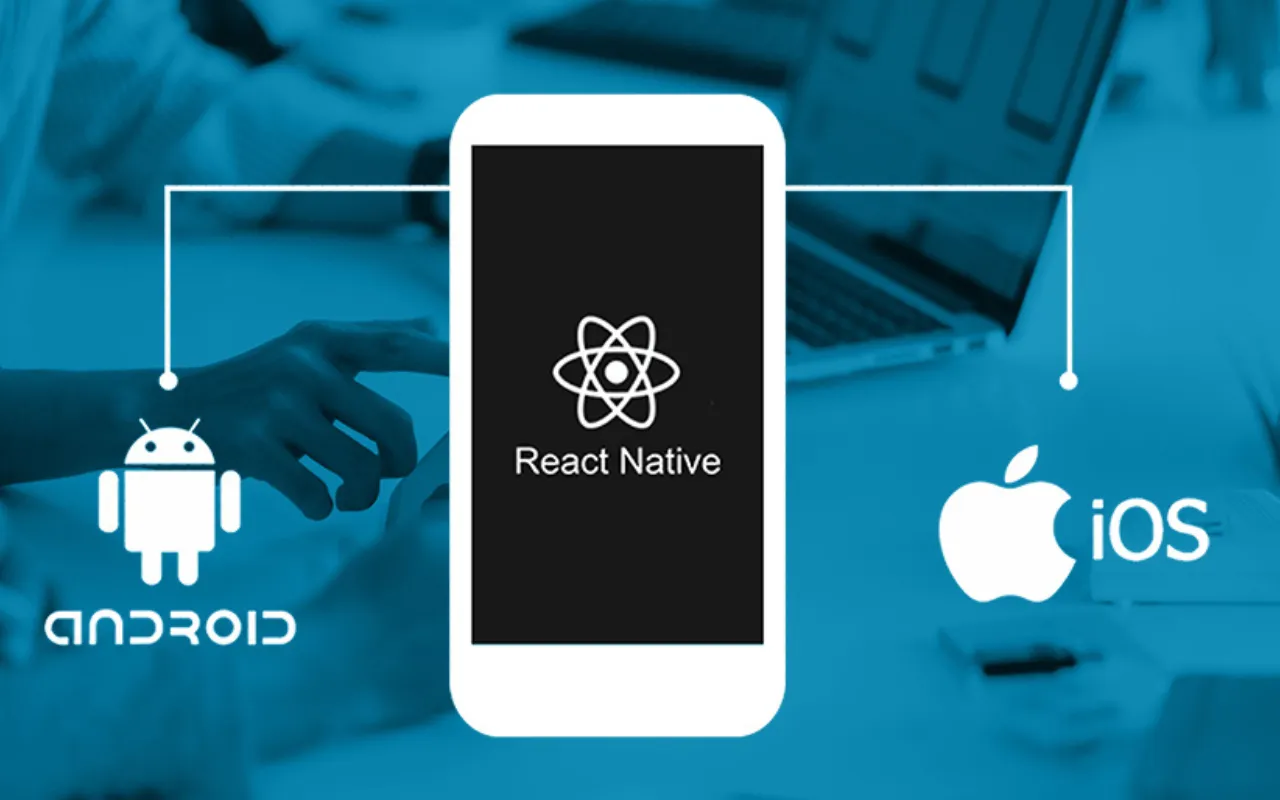
React Native is an open-source framework for building mobile apps, introduced by Facebook. The main purpose behind it was to make it possible to write shared code for both Android and iOS — using the familiar JavaScript, or its more structured form, TypeScript.
Unlike the older hybrid frameworks that presented web content inside a WebView, React Native uses each operating system's own native components. That means apps built with it are closer to native apps in performance and in user experience.
In React Native, the interface and the logic of a user's interaction are defined using React components, while behind the scenes a bridge connects to the operating system's native parts. This architecture lets a developer build an app that runs on both operating systems without having to master Java or Swift.
The main advantages of React Native in 2025
One of the most important reasons for React Native's popularity is the ability to write shared code for several platforms. A technical team can produce versions for Android and iOS from a single codebase and reduce development time and cost considerably. That matters strategically for start-ups and for projects with limited resources.
React Native is also built on the wide JavaScript ecosystem, a language deeply rooted in web development and more active than ever. That makes hiring and training people simpler for many companies.
The hot reload capability is another feature that makes development with React Native easier. With it, a developer can see their changes live without restarting the app — something that plays a real part in the speed of development and in refining the user experience.
React Native's large community of users and developers has also meant that learning resources, complementary libraries and wide technical support are available. That community both speeds up learning and provides the ground for developing supporting tools and fixing problems.
Another notable point is the ability to use libraries from the web ecosystem within React Native — something that lets development teams draw on the experience and tools of the front-end world and gain more speed and flexibility in designing a product.
The limits and challenges of React Native
Alongside its many advantages, React Native comes with limits that should be examined carefully before it is chosen as a project's main framework.
One important challenge is the dependence on native modules for particular app capabilities. If a project needs features such as a professional camera, heavy graphics processing, Bluetooth or precise GPS, the development team may have to write parts of the app in a native language (Java/Swift) or use plugins that need continuous maintenance.
In some scenarios too — particularly in apps with heavy graphics or complicated interaction — a slight drop in performance compared with native apps may be seen. That difference is imperceptible in many projects, but for apps focused on complicated animation or for mobile games, choosing React Native can be a challenge.
Another matter is keeping libraries and dependencies in step. Because React Native develops on the basis of many third-party packages, updating the framework's main version sometimes causes incompatibility with certain plugins. In long-running projects, that may call for more careful management and wider testing.
Finally, it should be borne in mind that in very large, multi-module projects, React Native's architecture may need more complicated structuring. Keeping the development team aligned, managing performance and holding the code together take experience and strategy in projects of that kind.
Which kinds of project suit React Native?
Capable as it is, React Native is not the best choice for every project. In some scenarios, though, it can be a very effective tool — particularly where speed, agility and getting the most out of your resources take priority.
First, apps designed as an MVP (minimum viable product) are an ideal case for React Native. In projects of this kind, the aim is to test an idea in the market while spending as little as possible. Rapid development, shared code and ready-made tools in React Native make it possible to produce a working version of an app in a short time and at lower cost.
Likewise, content, educational or service apps — video platforms, appointment booking apps, notification or teaching systems — which do not interact heavily with hardware, can be built with React Native without any loss of acceptable performance or user experience.
In projects where a fast release and continuous updates are vital — campaign-based apps, seasonal services or trial versions — React Native shortens the release cycle. That helps teams react faster in a competitive market and get revised versions to users with the least possible delay.
Another suitable scenario is teams with a background in web development who want to move into mobile. Because React Native is based on JavaScript and React's architecture, front-end developers can move into building mobile apps with the smallest possible learning curve.
Successful Iranian cases

React Native has been well received in Iran in recent years, and a number of successful apps have been built on it. Some of those projects, given their service or content nature, have made good use of React Native's rapid development and flexible updates.
Apps such as language-learning platforms, domestic ride-hailing systems and home services are among the areas that have used React Native to build a stable, efficient experience for their users.
One of the main advantages these projects gained was a shorter time to market. Developing for both operating systems at once, without needing separate teams, meant a first version could be ready in a short space of time and user feedback gathered early. Some of these teams also met challenges, though — the need to customise particular modules, or to tune performance on weaker devices among them. In many cases, these limits have been managed successfully by building native bridges and using a combination of suitable plugins.
A realistic look at these examples shows that React Native, implemented and managed properly, can be a dependable option for a wide range of projects in Iran.
A brief comparison with the alternatives (Flutter in particular)
Among cross-platform frameworks, a comparison between React Native and Flutter is unavoidable. Both have their own advantages and their own following, but there are also differences between them worth weighing when making a choice.
Drawing on the JavaScript ecosystem and with a longer history behind it, React Native is an appealing option for web developers. Flutter, with an architecture entirely independent of the operating system's native parts and with the Dart language, offers greater freedom in designing an interface.
On graphical performance, Flutter usually has the upper hand, particularly in complicated designs or heavy animation. React Native, though, has advantages in integrating with the libraries and services of the JavaScript ecosystem that cannot be ignored. The key point is that no option is simply "good" on its own — every project has to arrive at the right framework on the basis of its real needs, its team's skills and its development outlook.
In summary
In 2025, React Native is not only a widely used choice but a durable approach to building cross-platform apps. Many service and educational projects, and many MVPs, have used its capabilities to reach the market quickly and well. At the same time, being realistic in analysing its limits as well as its strengths is essential. Choosing a development framework should be done with a long view and a deep understanding of a project's circumstances, because the wrong route can carry considerable costs in technology, time and people. Working alongside specialist teams with experience of designing a variety of apps on different platforms can therefore make the process of choosing and building clearer and more purposeful — something many successful teams have not overlooked.