In building an app, choosing the right framework is among the first strategic decisions any young team takes. That choice does not rest on the programming language or on technical performance alone; it also takes in a set of factors such as cost, development time, maintainability, user experience and the project's longevity. Among these, the open-source framework Flutter, developed by Google, has found a particular place among developers and start-ups in recent years. The promise of "writing code once for several platforms" and a flexible, attractive interface design have been the main reasons for the wide turn towards this tool. In 2025, though, that turn is not merely a technical choice; it has become a strategic decision that can determine whether a start-up grows or finds itself constrained. In this article we take a broad look at Flutter and examine why so many start-ups have chosen this framework as the technical core of their projects this year.
What is Flutter?
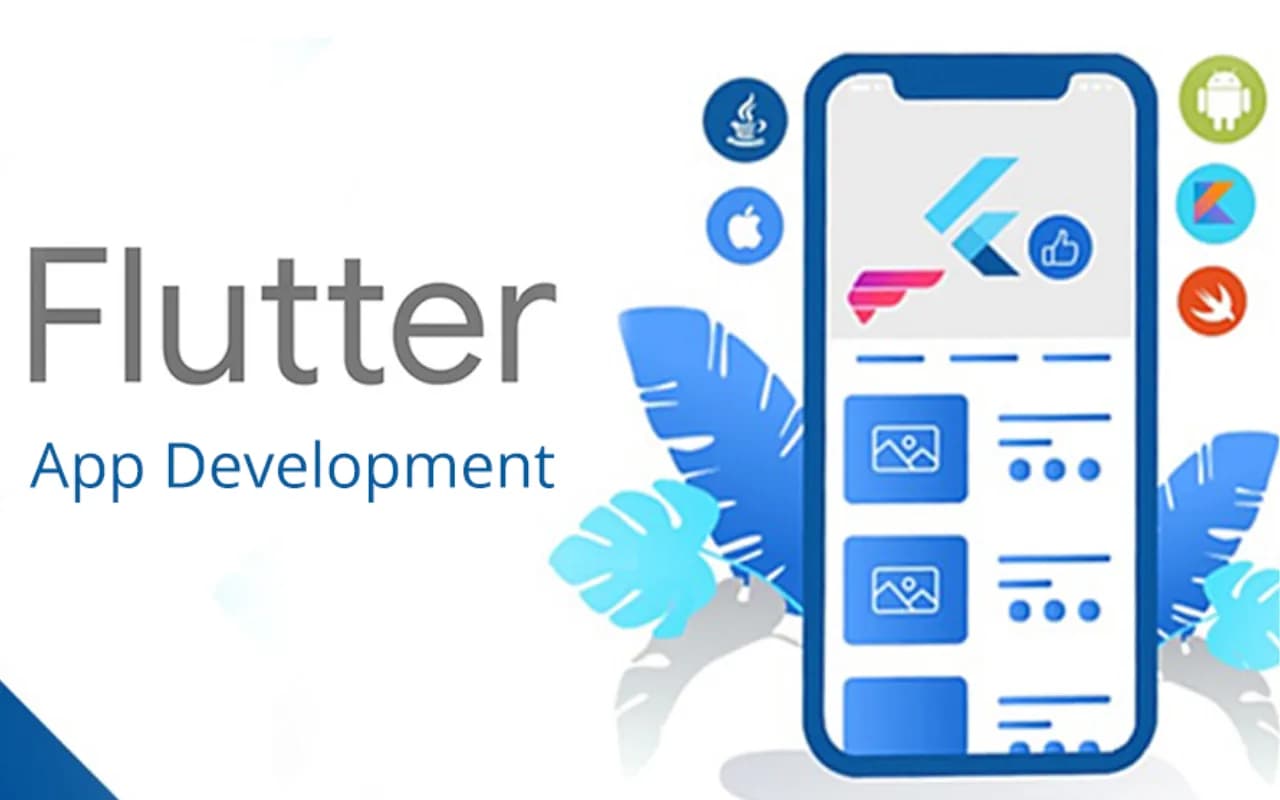
Flutter is an open-source, cross-platform framework developed by Google whose purpose is to simplify designing and building an app for a range of platforms — Android, iOS, web and desktop — from a single codebase. It uses the Dart programming language and, rather than relying on the operating system's native components, uses its own graphics engine to render the interface.
One of the key differences between Flutter and frameworks such as React Native, or native development, is that in Flutter the interface elements are built entirely independently of the operating system. That lets designers and developers create a consistent experience without depending on a particular version or on the constraints of a native UI.
Another feature of Flutter's architecture is the widget tree: a concept in which everything is defined as a widget, from a simple piece of text to the most complex parts of an interface. Its hot reload capability also makes it possible to see code changes instantly without recompiling — something that has a striking effect on the speed of design and development.
Why are start-ups turning to Flutter in 2025?

Start-ups usually enter the market with limited resources, small teams and tight timelines. In those circumstances, a tool that can speed up development, reduce costs and at the same time create a professional experience for the user is a strategic advantage — and it is exactly here that Flutter shows its strength.
One of the most important reasons for turning to Flutter is shorter development time. With a single codebase producing output for several platforms, there is no need to build separate iOS and Android versions. That not only speeds production up, it also lightens the burden of maintenance and updates.
Cost savings are the second key advantage, and vital in particular for start-ups at the early stages of raising money. Flutter makes it possible for a small team, or even a single full-stack developer, to prepare a product of acceptable quality for several platforms.
On interface design too, Flutter offers tools that make it simple to build beautiful, interactive UIs in step with current trends. That advantage matters all the more when we consider that today's users hold higher standards for what they see and how they use it.
Beyond this, Google's official backing and Flutter's lively developer community have made learning and solving problems easier for technical teams. Flutter also gives teams the ability to test, deploy and release versions quickly, which is very effective when assessing a market or making rapid changes.
In deciding how to go about building an app, tools such as Flutter can create more room for creativity and productivity. In that spirit, teams looking for a professional route in app design usually turn to dependable sources so that their technical decision proceeds within a purposeful, experience-led framework.
The advantages of designing an interface with Flutter
One of Flutter's distinctive features is its ability to build advanced, flexible interfaces. Unlike many cross-platform frameworks, UI design in Flutter is done on the basis of widgets. That widget-led structure lets designers build every part of an app precisely, with full scope for customisation and without depending on the operating system's native components.
Designing smooth animation and user-led interaction is far simpler in Flutter than on other platforms. Even the most complicated state changes or transitions can be created with brief, efficient code — a capability that both makes an app feel professional and helps keep the user within the software.
From a design point of view, Flutter moves in step with modern UI/UX principles. Its capabilities let a designer build interfaces that are attractive aesthetically and that also answer the needs of a range of users in accessibility and efficiency. In the end, the ability to build interfaces close to the native experience, alongside a great deal of scope for customisation, has given this framework a rare flexibility — a fundamental advantage for app design teams who care about the user's experience.

The challenges and limits of Flutter, realistically considered
For all its many advantages, Flutter, like any tool, has limits that should be weighed carefully when choosing it for a project.
The first challenge is its relative performance compared with fully native apps. Flutter performs close to a native app in many cases, but in projects with very demanding graphics, or that depend on particular hardware features, it may fall slightly behind a native implementation.
Flutter is also built on the Dart programming language. Learning Dart is not especially hard for an experienced developer, but it still requires developers familiar with the language and its ecosystem. For some teams, hiring or training such people may take time.
Finally, dependence on the development community and the libraries available is one of Flutter's aspects worth considering. Its community is growing, but in some specialist areas (advanced image processing, or access to particular hardware) you may still find a shortage or an absence of dependable libraries. In some projects that can leave a developer having to build custom solutions, which adds cost and complexity.
The future of Flutter in app design
Looking at how Flutter has developed over the past few years, it is clear that Google has a long-term plan for the framework. Flutter is not limited to building mobile apps: its official support for web, desktop and even embedded systems represents strategic steps towards becoming a comprehensive multi-platform development solution.
In that spirit, Flutter has found use not only in consumer apps but in building internal enterprise tools, admin panels and even the interfaces of hardware devices. That breadth shows that Flutter is on its way to becoming an infrastructure for building digital products in a wide range of scenarios.
It has to be accepted, though, that no framework suits every project. Choosing Flutter should be done with a project's circumstances, its users' needs, its budget, the team's expertise and the technical constraints in mind. A project designed for one particular platform and needing deep integration with the operating system, for instance, may perform better with a native implementation.
In summary
In 2025, Flutter has become one of the serious and reasonable choices for designing and building an app among start-ups. The combination of speed, flexibility, visual quality and multi-platform support has made this framework a dependable tool on a digital product's path to growth. Succeeding with Flutter, though, like any other technology, takes careful analysis and a match with a project's real needs. Choosing a tool blindly, without weighing the technical dimensions and the user's experience, can become an obstacle to progress over the long term. It is therefore better to decide on an app's technical foundations within an expert analysis and alongside teams who pursue the design and development of a product purposefully. Consulting such teams — those working in experience-led app design in step with current technology among them — can smooth and clarify the path of development, without appearing promotional or imposed.