
What is a web design contract?
Why is a web design contract essential?
A guide to writing a web design contract
The parties
The subject of the contract
Its term and timing
The contract sum
Correspondence and how to communicate
The contractor's obligations
The client's obligations
Force majeure
Termination and dispute resolution
A professional website is essential for any business today. Designing a successful website, though, takes careful planning, effective collaboration and mutual understanding between client and designer. A professional web design contract is the document that guarantees them. It creates a legal, transparent framework for working together and prevents possible disputes. In this article we look at the key and essential points in drafting a professional web design contract, so that you can begin your projects with an easy mind.
What is a web design contract?
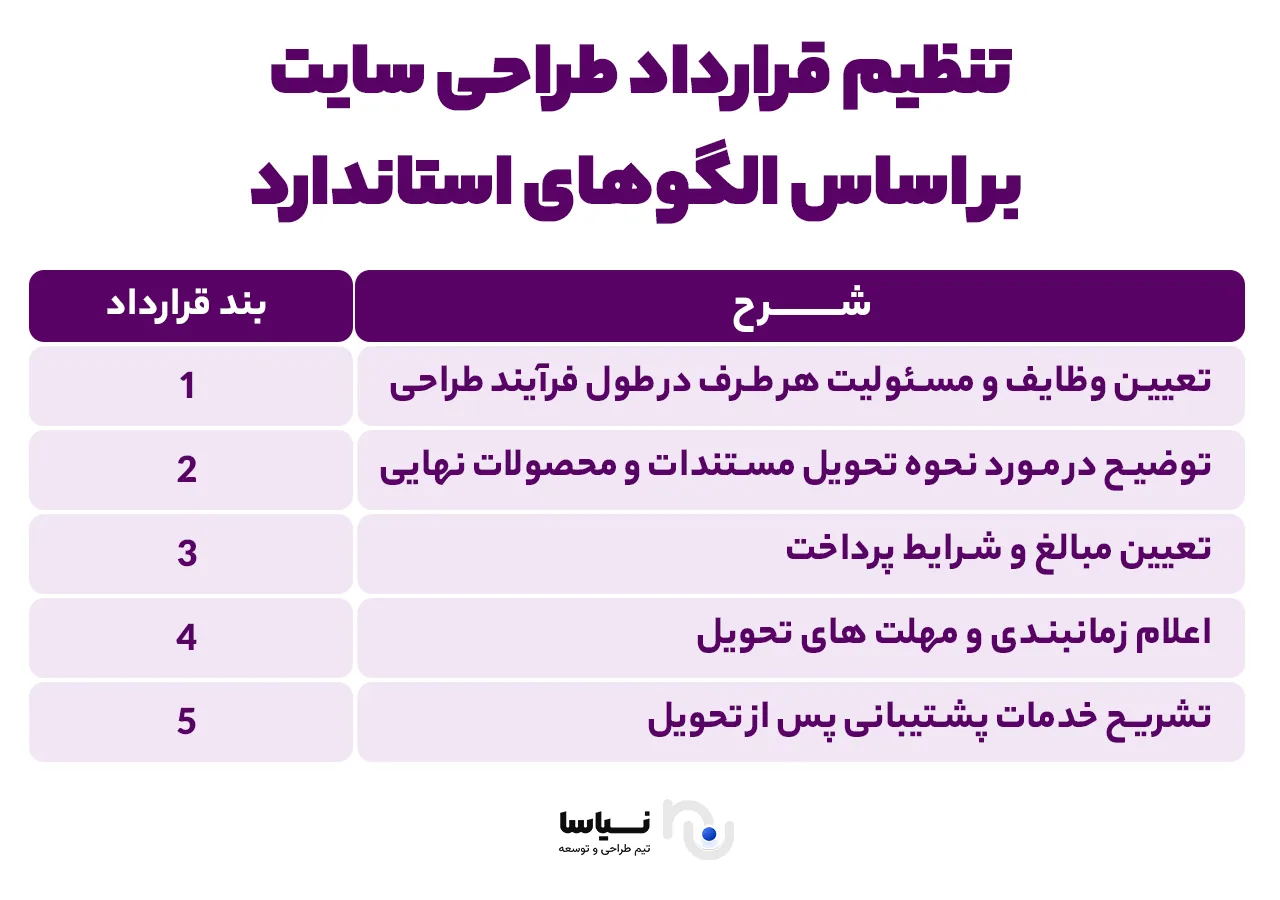
If you intend to design a website for yourself or for someone else, drawing up a clear, precise contract is essential. That document, known as a web design contract, sets out the legal framework that binds the parties to carry out their obligations. Once signed by both parties, it acquires legal force and serves as the basis for the work. A web design contract should include details such as the subject of the contract, the sum payable, how it is to be paid, the parties' full particulars, the terms of termination and the obligations of both. These points show how important it is to draw the contract up precisely and completely.
Why is a web design contract essential?
Designing a website is a slow and complicated process. Knowing the parties' rights and duties, the designer's in particular, is therefore essential. A designer has to know how to defend their rights if the contract is breached. A client, in turn, has to rely on the contract's terms in trusting the designer and making the necessary payments on time.
Drawing up a thorough, complete contract from scratch is difficult and slow, and key points may be missed along the way and cause difficulties for the parties later. To prevent that, using ready-made, pre-drafted contracts is the best approach. That both speeds things up and reduces the cost of legal advice. You can also leave drafting the contract to a legal specialist so as to be sure that every legal aspect is observed.
A guide to writing a web design contract
Every contract is made up of various details whose form and substance change with the kind of project. A single fixed version cannot therefore be used for every project. Paying to have a contract drawn up for every project, on the other hand, can carry a considerable financial burden. The right solution is to learn the principles and rules of writing a contract. In this section, the key parts of a web design contract are set out fully, so that you can use it as a thorough guide on all your projects.
The parties
Every contract has two main parties bound to carry out the obligations set out in it. Those two parties play a vital part in the contract's validity and its performance.
In this section, the details of the contractor (the party undertaking to do the work) and of the client (the party ordering it) should be recorded fully and precisely. Those details include the following:
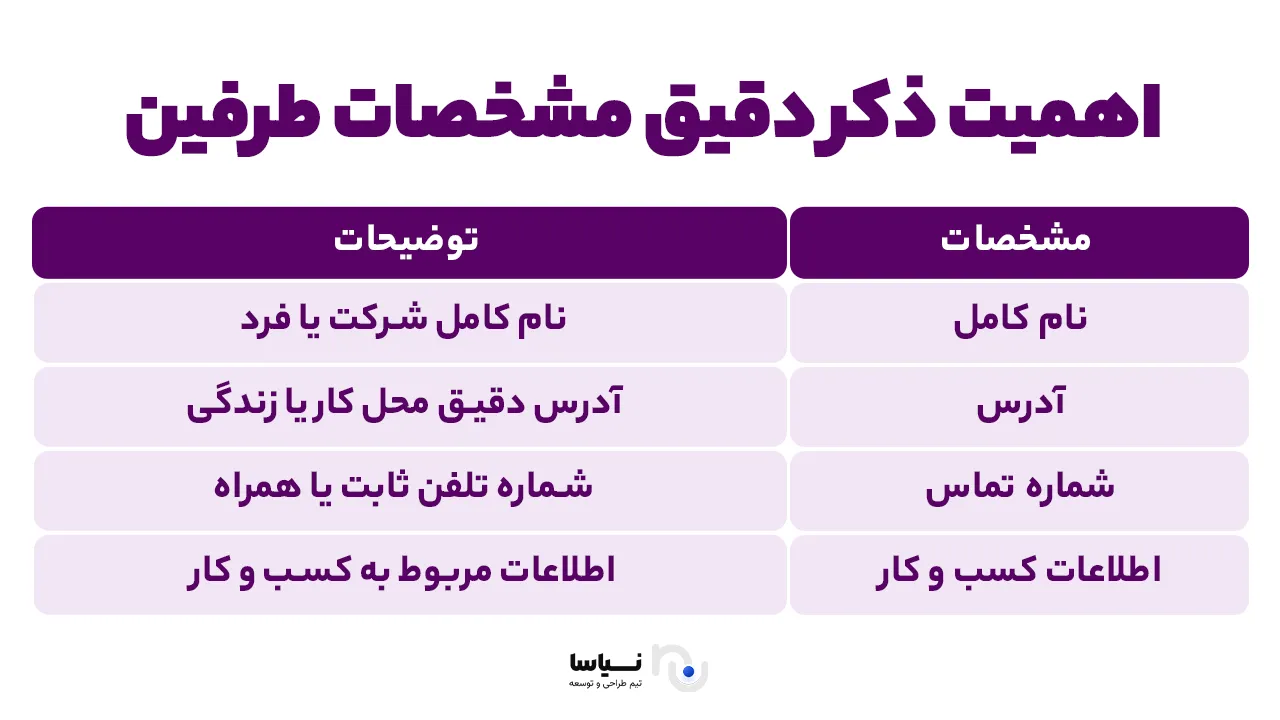
For natural persons (individuals):
Full name
National identification number
Postcode and the exact address of their residence
Landline number (optional)
Mobile number and email address
For legal persons (companies and organisations):
The company's or organisation's name
Its registration number
The position of the person signing the contract on the company's or organisation's behalf.
Setting these details out precisely and completely prevents any ambiguity or dispute later and assures the parties that they are dealing with credible, lawful persons or bodies.
The subject of the contract
In the section on the subject of the contract, you have to describe the general information about the web design project and the terms agreed, clearly and briefly. This part is the initial presentation of the project and the contract's general framework. The technical
and specialist details of the project are better presented in separate schedules. In this section, for instance, you might set out the following:
"This contract was signed on [date] between [contractor's name] as contractor and [client's name] as client, for the design and development of a website using the programming language / content management system [name of the language
or system] on the domain [domain name] owned by [owner's name], in Persian, in [number] pages and [number] schedules. The parties undertake to carry out the terms of this contract in full.
Its term and timing
In a web design contract, care in setting the timing matters a great deal. The exact date of the contract, the delivery date, the length of the support period, the testing and review period, and the start and end dates of all the parties' obligations should be clearly established.
One of the common mistakes in contracts of this kind is not stating a precise completion date. That can lead to serious problems and disputes between contractor and client. Unlike a screenplay with an open ending, a web design contract has to have a defined completion date. That date is the point after which the parties' obligations come to an end, and every duty — delivering the project and making the payments among them — has to have been carried out by then. Beyond that, not taking working days and holidays into account can also cause difficulty. As we know, a week has five working days and two days off. Public holidays also have to be reckoned with. Given the number of holidays in a year, not accounting for this can push a project's delivery back by several months. That considerable delay can create serious problems for both parties.
The contract sum
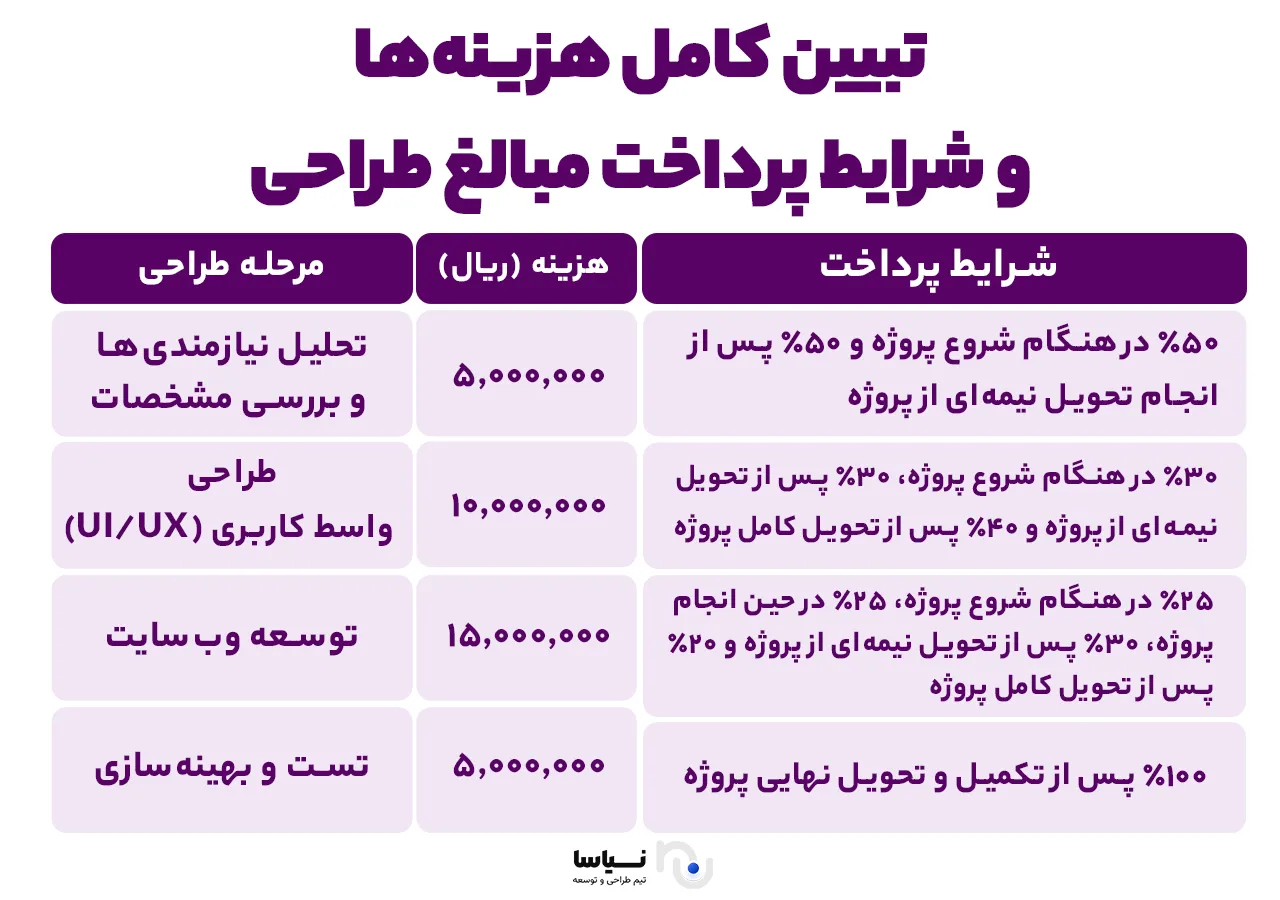
In a web design contract, making the payment terms clear matters a great deal. If the sum is to be paid in instalments, always state the amount of each instalment and the exact date of payment in the contract. One of the best ways of managing a project is to divide it into separate phases. That lets you stop work if the client does not keep to their obligations.
The sum in a web design contract should be arranged so that if payment is delayed, the contractor can halt the project in their own interest and prevent a loss. It is recommended that you do not begin work before receiving a deposit and that you state in the contract that the client is obliged to pay it by a defined date after signing. Failing that, the contractor may terminate the contract and draw up another on new terms.
State clearly in the contract that "the sum and the term of this contract are solely for carrying out the terms of this contract. If the client makes new requests, then once the contractor has agreed to them the time and cost required will be stated, and they will be carried out once the client has paid and the obligations of the present contract have been completed."
It often happens that a client terminates a contract after a considerable part of a project has been done. That can cause the contractor a considerable loss. To prevent it, it is better to state in the contract: "if the client terminates the contract, the contractor is under no obligation to refund any sums paid. The contractor may also claim from the client the costs incurred on the project, and the client is obliged to pay them."
Correspondence and how to communicate
One of the perennial challenges for a web designer is repeated calls from a client after every small change or new event on the site. Those calls, often made outside working hours and during the contractor's rest, can be very trying. To prevent that, it is better to establish from the outset defined means of communication and defined hours for answering the client. That both prevents unnecessary disturbance and lets you attend to the client's questions and needs in an orderly, planned way.
The contractor's obligations
One of the most important parts of a web design contract is the section on the contractor's obligations. Here you should set out all your duties and responsibilities in the web design clearly and precisely. You also have to disclaim clearly the responsibilities that fall to the client, such as the site's content.
To prevent any ambiguity or misunderstanding, it is better to define the limits of your obligations fully. State precisely, for instance, the manner and content of the training on using the site. If you offer a support period, set out its full details and establish what support covers and what falls outside it. Many clients raise new requests during the support period in order to reduce their costs, which can lead to a dispute.
Finally, remember to disclaim entirely any responsibility for the conditions of the site's earning and how it earns; a client may expect you to guarantee their revenue, which lies outside the scope of your duties.
The client's obligations
One of the most important obligations of a client in a web design contract is paying the project's sums on time. Delays in payment can be very unpleasant and even damaging for the contractor. It is therefore recommended that the contractor set out in the contract how they will respond if the client does not keep to their word. That may include a penalty for late payment or suspending the project until the account is settled.
The contractor should nonetheless be flexible in dealing with a client who does not keep to their word and should leave room for negotiation. Remember that conflict and complaint are not in either party's interest and can do serious damage to a working relationship.
Beyond payment, a client's cooperation with the contractor also matters a great deal. If a project is held up because images or other information are not provided in time, for instance, the contractor's obligations may run into difficulty. That delay can cost the contractor money and time and even cause psychological strain. The contract should therefore also state the client's obligation to cooperate and to provide the information needed in time.
Force majeure
In the web design contract you draw up, always devote a clause to force majeure. That clause can be very useful where an unforeseen event — new government rules, international restrictions or a social crisis such as the coronavirus pandemic — delays delivery of the project or halts it altogether.
In this clause, you should explain clearly what you will do if such circumstances arise. You might state, for instance, that in the event of a delay the delivery date will be extended proportionately, or that if the project is cancelled part of the sums paid will be returned to the client. You can also establish how the client will be informed of such circumstances and of any changes to the project.
By including this clause in the contract, you can prevent possible disputes later and manage a project with greater calm and confidence in a crisis.
Termination and dispute resolution
The termination clause, which matters both to the contractor and to the client, should be drawn up so as to prevent possible losses. It should set out precisely and clearly how the contract may be terminated, the terms of any payments, and how the project is to be handed over after termination.
Beyond that, one of the key points in this clause is establishing the terms of termination without objection — that is, establishing in what circumstances either party (contractor or client) may terminate the contract without the other's agreement. If, after receiving the first phase of a project, a contractor meets bad faith and disrespect from the client, for instance, they should be able to terminate the contract without paying damages and without needing the client's agreement.
In any contract, a dispute may arise. To prevent larger problems, it is better to establish precisely in the contract that if a dispute arises, an attempt should first be made to resolve it by negotiation. If negotiation comes to nothing, the dispute should be referred to an arbitrator agreed by both parties. If arbitration also comes to nothing, the matter should go to the courts.
In summary
In closing, it is essential to stress how important it is to draw up a thorough, professional web design contract. That document not only provides a legal framework for the work between designer and client, it also prevents possible disputes later. Bearing in mind the key points set out in this guide, a contract can be drawn up that fully serves both parties' interests. Remember that a precise, transparent contract not only shows your professionalism, it also lays the ground for a successful and satisfying working relationship.