Can I see the company's previous work?
What experience do you have designing sites like my business?
What is your web design process?
How bespoke is your web design?
How bespoke is your web design?
Which content management system (CMS) do you use?
How is the site designed for basic SEO?
Do you provide support and maintenance after the site is handed over?
Do you guarantee the site's security?
Will the site's design accord with my business's branding?
How long will it take you to design and deliver the site?
Do you have work similar to my project?
Will it be possible to upgrade the site, add new features or extend it later?
How do you guarantee the security of the site you design?
Are interface design (UI) and user experience (UX) part of the project?
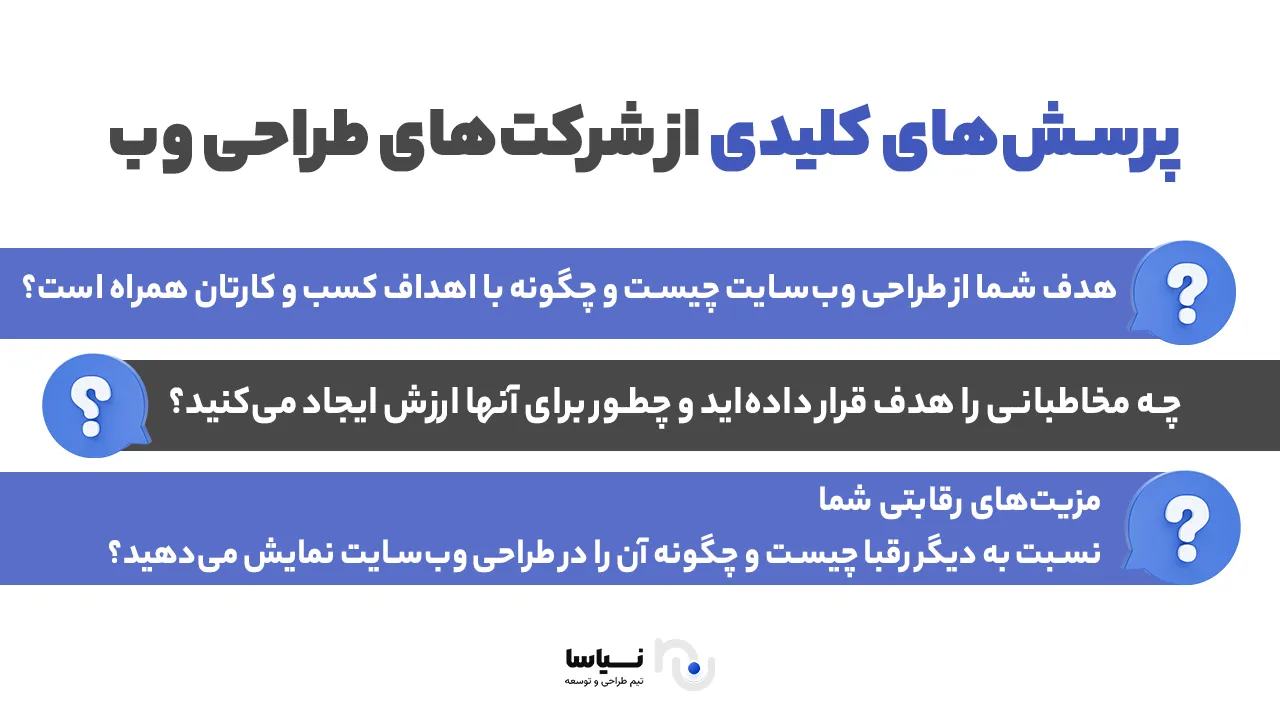
Before any web design project begins, one of the most important things to do is to ask a web design company precise, purposeful questions. Those questions not only make expectations clear, they also prevent possible misunderstandings, unexpected delays or hidden costs. Many of the problems that arise during a design or after a site is handed over have their roots in the absence of clear, careful conversation at the outset.
By asking key questions, you can arrive at a better understanding of the design team, of how the project will run, of its technical abilities, of the company's commitments, of support after handover and even of the site's longevity. These questions act as a filter and help you make the best choice among your options for a bespoke website design.
Can I see the company's previous work?
One of the first and most important questions to ask a web design company concerns its previous work. Looking at what they have done helps you become acquainted with their design style, their technical quality, the range of their projects and the design team's creativity. You can also see whether the company has experience of designing sites in a field like your own.
A portfolio is living evidence of a company's real abilities. If a company cannot show you examples of its previous projects, or avoids doing so, there is cause for concern. Professional companies, by contrast, generally present their past projects with pride and may even invite you to visit the live versions of the sites they have designed so that you can see how they actually work on the web.
What experience do you have designing sites like my business?
Previous experience in a field like your own is an important advantage in a web design company. If the company has designed for businesses in a similar field before, it will be familiar with that market's needs, challenges and expectations. That means your site will be designed more professionally and that more precise steps will be taken towards success online.
Designing a site for an online shop, for instance, differs considerably from designing one for a service company or an online school. If a design company has previous experience in your field, the chance of error falls and the design will proceed with a better and more specialist understanding.
What is your web design process?
One very important thing to ask a web design company is the exact process and stages of designing a site. That question helps you know how the project will proceed, what its stages are, what the timings will be and what to expect at each stage.
The design process may include a number of stages: establishing requirements, wireframing, graphic design, technical development, final testing and finally handover. A professional company should be able to explain these stages in detail and assure you that the project will proceed along a defined, professional path. Asking this question also shows you whether the company will stay in touch with you along the way.
How bespoke is your web design?
How bespoke a site's design is plays an important part in setting your business apart from its competitors. When you ask a web design company how bespoke its sites are, you are really asking whether they use ready-made templates or offer a bespoke design suited to your particular needs.
Many companies use ready-made templates to reduce cost or time. Suitable as that is for simple projects, it will not suit a business needing a particular visual identity and particular functionality. A bespoke design not only gives your site a distinctive appearance, it can also make the user's experience better.
Asking this question also shows whether a company pays attention to your particular needs or simply carries out the same project over and over. A bespoke design can play a decisive part in branding, in improving SEO, in a site's speed and in user engagement.
Is your design responsive?
Users today visit sites from a great variety of devices: phones and tablets, laptops and large monitors. Responsive design has therefore become an essential standard. It means your site displays properly on every device, with no need for the user to zoom in or scroll sideways.
Asking a web design company this matters a great deal, because some companies still offer responsive design as a separate option at extra cost, when it should be present by default in every project.
A site that is not responsive not only gives a poor user experience, it will also be marked down in Google's rankings, because search engines set great store by the mobile user's experience. Make sure, then, that your site is designed to be fully responsive from the foundations up.
Which content management system (CMS) do you use?
A content management system (CMS) is the platform that lets you manage, edit and update your site's content without technical knowledge. Asking a web design company this is very important, because the right CMS can bear directly on ease of use, on security, on SEO and even on the cost of maintaining a site.
Some companies use well-known CMSs such as WordPress, Joomla or Drupal, which have a wide support community. Others use their own bespoke CMS, which may have advantages such as greater security or more scope for customisation but which, in return, creates limits in development, in moving the site, or in access to another developer.
Always ask whether you will have full access to the admin panel once the site is handed over. Ask, too, whether they will help you learn to use the CMS. The aim is not to depend on the company for simple tasks once the site is delivered.
How is the site designed for basic SEO?
One of the most important aspects to observe in designing a site is search engine optimisation, or basic SEO. If your site is not designed with an SEO-friendly structure from the start, reaching a high position in Google will be difficult. Asking this question therefore helps you understand whether a web design company pays attention to the principles of SEO.
Basic SEO includes matters such as well-formed URLs, a site's load speed, heading tags (H1, H2, …), image optimisation, a sitemap and observing coding standards. If these are not observed in the initial design, you will later have to pay more to optimise the site again.
Ask the company whether these things are included by default in the initial design or whether you have to pay separately for them. Designing an SEO-friendly site from the start makes your digital marketing simpler and less expensive.
Do you provide support and maintenance after the site is handed over?
Handing over a site is not the end of the road but the beginning of another stage of dealing with a web design company. Your site may need updating after launch, may run into a technical problem, or you may want to change part of its content. You should therefore ask the company whether it provides support and maintenance after handover.
Some companies provide initial support free for a limited period (three to six months, say) and then offer monthly or annual support packages. The kind of support also matters: does it cover technical problems alone? Does it include training on the admin panel? Does it include security updates or backups?
Without proper support, you may later have to pay extra for every small problem, or even change provider. Make sure, then, that the terms, the duration and the kind of support have been set out to you clearly.
Do you guarantee the site's security?
Security is one of the most vital aspects of web design. An insecure website not only puts users' information at risk, it also damages your brand's reputation. You should therefore ask a web design company what it does to secure a site and whether it guarantees that security.
Among the most important security measures are using HTTPS, preventing bots and XSS or SQL injection attacks, using secure plugins, updating the content management system continuously and restricting access. A professional company should be able to explain clearly what methods it uses to protect your site.
It also matters to know what responsibility the company bears if your site runs into a security problem. Is restoring the data and resolving the problem set out in the contract? These things should be established at the outset and stated in the contract, so that if anything goes wrong there is a defined course of action.
Will the site's design accord with my business's branding?
Your website should reflect your brand's identity: its colours, typefaces and images, the tone of its content and its layout. A design that accords with your branding creates a coherent experience for users and strengthens the picture a customer holds of your brand. You should therefore ask a web design company how they achieve that accord.
Before beginning a design, a professional company researches your brand, looks at your logo, your corporate colours, your slogan, your target audience and your brand's values, and takes them into account in the design. It is not merely a matter of building a beautiful site; they have to build a site that "belongs to your brand".
If your brand is formal, luxurious or aimed at a younger audience, the design should reflect those qualities. If you intend to extend the brand in future, the site's design should also be able to adapt and grow with it.
How long will it take you to design and deliver the site?
Managing time matters a great deal in a web design project, particularly if you have a set schedule for launching a business, for advertising or for a marketing campaign. One of the key questions is therefore how long a web design company needs to complete and hand over a site.
Delivery time depends on a number of things: the complexity of the design, the number of pages, the need for particular features such as an online shop, and how ready your content is. A professional company will usually provide a precise schedule setting out each stage, from the first design to the final handover.
It also matters to ask what commitment the company makes if there is a delay. Is a penalty or particular accountability defined? Is the delivery time stated in the contract? These questions help keep a project on the right course and prevent wasted time.
Do you have work similar to my project?
One of the best ways of judging a web design company's ability is to look at its previous work. Better still is to ask about projects like your own business. That way you can see whether the company has experience of designing in your field.
If you are an online shop, a service company, a personal brand or an educational institution, looking at similar examples in that field helps you get a better sense of the company's ability to meet the particular needs of that kind of business. Designing for an online shop, for instance, should focus on the user experience and the buying process, while designing for a personal brand may focus more on visual style and storytelling.
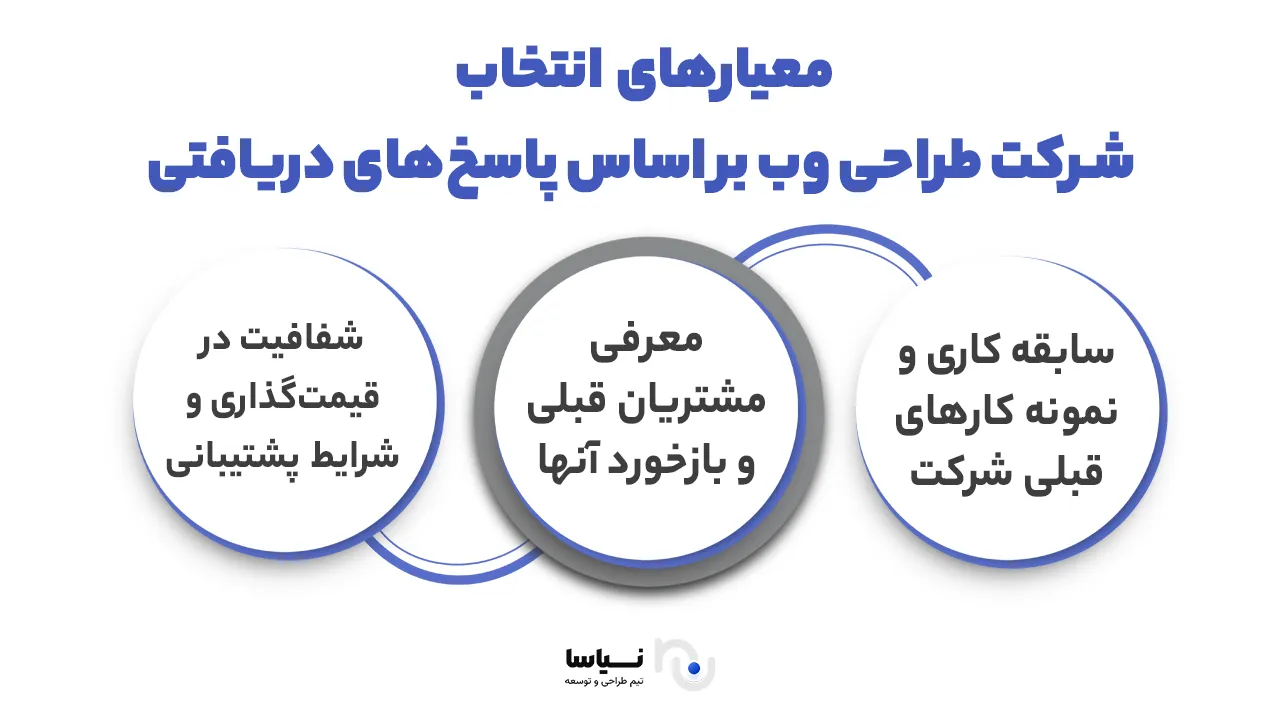
Always look at their work in terms of design quality, load speed, responsiveness and user experience. You can also contact previous clients and ask their view of working with the company.
Will it be possible to upgrade the site, add new features or extend it later?
A site should not be designed only for the present; it should also be able to grow and extend in future. Your business may grow and need features such as an online shop, advanced forms, a membership system or connections to other software. Always ask, then, whether the site as designed can be upgraded and extended.
A good site should be built modularly — that is, so that parts can be added or changed without a complete redesign. That matters particularly with the CMS: if the content management system is of a kind whose development is limited or proprietary, you will run into difficulty later.
Ask, too, whether the company provides these services if new changes are needed. Are the costs clear? Is there a limit on the scope of the changes? Having a long view of a site means saving time and money later.
How do you guarantee the security of the site you design?
A site's security is one of the most sensitive and vital aspects of web design, because any security flaw may lead to users' information being stolen, to data being lost, to the site being hacked or even to legal penalties. You should therefore ask a web design company precisely what steps it takes to guarantee your site's security.
Some of the basic security measures are: installing an SSL certificate to encrypt information between user and server, restricting administrative access, protecting against common attacks such as SQL injection and cross-site scripting (XSS), using up-to-date and reputable plugins and themes, taking regular backups and updating the content management system (CMS) continuously.
The platform a site is built on also matters. In systems such as WordPress, for instance, security depends greatly on the choice of plugins and on proper configuration. Ask the designer whether they carry out security testing and what responsibility they bear if the site runs into difficulty.
In the end, security should not be a matter for the design stage alone; it should also be part of a site's continuing maintenance and support.
Are interface design (UI) and user experience (UX) part of the project?
A beautiful site is not necessarily a successful one unless a user can interact with it readily. That is why interface design (UI) and user experience (UX) play a key part in how a site performs. Before signing a contract, you should ask a web design company whether they take these two aspects into account as specialists.
UI has to do with a site's appearance: the arrangement of elements, the choice of colours, the typefaces and the graphics. UX focuses more on how the user experiences using the site: how quickly they can reach the information they want, whether the path to buying or signing up is clear and free of confusion, and so on.
A professional team uses tools such as Figma or Adobe XD for the initial interface design and, before building the final version, gives you mock-ups of the site's pages so that your view can be taken into account in the design.
Alongside the visual design, using current technologies such as responsive design, fast page loading, light and smooth animation, and optimisation for different devices (phone, tablet and desktop) are all part of a professional user experience.
A final word: why ask questions and sign an unambiguous contract?
Designing a website is not merely a technical project; it is a route into the digital world and into engaging with an audience. To succeed on that road, you have to ask precise, key questions before working with a web design company and be sure you have received clear, reasonable and documented answers. Every question examined in this article can prevent later problems, extra costs, delays or dissatisfaction with the final result. Making expectations, commitments, timings, support, security, design and even financial terms completely clear is the foundation stone of a successful working relationship. An unambiguous contract makes the boundaries of responsibility and expectation clear both to you and to the design company. That clarity means the project proceeds on the right course and calmly, and that in the end you receive a site that serves your business's growth both technically and in terms of branding. Before signing any contract, then, take the time, ask questions, do your research and enter this road without ambiguity.