The need to keep learning in a changing technological world
Managing clients' expectations and communicating effectively with them
Intense competition in the web design market
Keeping up with design and user experience (UX/UI) trends
The mental strain of creative work and intensive projects
The difficulty of finding steady work and long-term clients
Practical guidance for meeting the challenges and succeeding in web design
How to be a successful, professional web designer
Web design is one of the popular and growing occupations in today's digital world. As the online world has spread, businesses need an effective presence on the internet more than ever, which means demand for professional web designers is continuously rising. Alongside those attractions, though, web design is a challenging and sometimes complicated occupation. It is a combination of art, technology, user psychology and technical knowledge. A designer has to be familiar at once with visual creativity, the principles of user experience (UX) and the technical rules of coding. Beyond that, the ability to communicate effectively with clients, to keep technical knowledge up to date, to manage projects and to cope with time pressure are among the skills a professional designer has to develop. In this article we look at the most important challenges web designers face and offer practical approaches to each. Whether you are setting out in bespoke web design or have been working in it for a long time, this piece can help you better understand your professional path and strengthen your abilities.
The need to keep learning in a changing technological world
One of the greatest challenges web designers face is the continuous, rapid change in the world of technology. Unlike many traditional occupations with relative stability, web design is always in flux. Frameworks, programming languages, design standards, search engine algorithms and even users' tastes change constantly.
Rapid change in tools and frameworks
A web designer who was working with simple HTML and CSS yesterday now has to be familiar with frameworks such as Tailwind and Bootstrap, or with tools such as Figma, Webflow and JavaScript ES6. Tomorrow a new framework may appear that changes the standards again. If a designer cannot keep pace with that change, they will very soon fall behind the job market.
Keeping up with design trends
Visual design trends — minimalism, neumorphism, dark mode, modern typography — are constantly changing. A site design that looks modern today may look dated and unappealing a few months later. Understanding the trends and applying them properly in projects takes continuous attention to reputable sources.
Practical ways of learning continuously
To overcome this challenge, successful designers have accepted learning as an inseparable part of their way of life. Some effective ways of learning continuously are:
Reading reputable sources continuously: sites such as MDN Web Docs, CSS-Tricks and Smashing Magazine, or specialist design blogs.
Taking online courses: platforms such as Coursera, Udemy, Frontend Masters and Scrimba offer remarkable resources.
Practising with real projects: learning by doing is the best way of mastering a skill.
Joining specialist forums and groups: taking part in GitHub communities, Reddit or Persian-language Telegram groups can help you exchange experience.
Following specialists in the field on social networks: following prominent designers and developers on Twitter, LinkedIn or YouTube can be inspiring.
In the end, accepting that "learning never ends" can keep a designer's mind ready for continuous growth.
Managing clients' expectations and communicating effectively with them
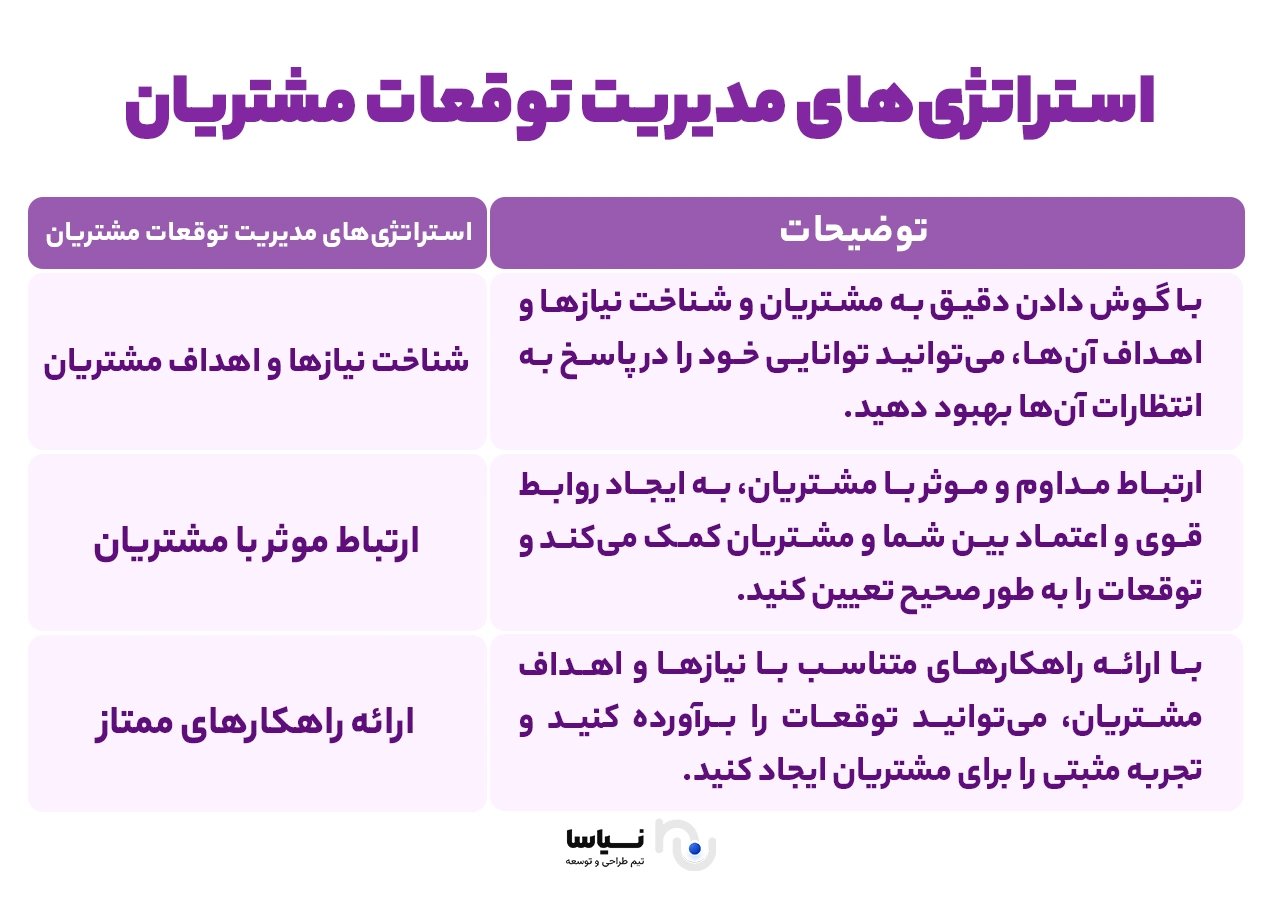
One of the key challenges in web design is dealing with clients and managing their expectations. Many designers, particularly in their early years, meet projects in which clients have unrealistic demands, unclear expectations or even no understanding of the design process. If that is not managed properly, it not only leaves both sides dissatisfied, it also wastes the designer's time and energy.
The difference between a designer's and a client's view
Clients often imagine web design to be a simple, quick job, whereas for a designer every project is a set of stages: analysis, design, building and testing. Many clients do not know that even a seemingly simple change (moving an element on a page, say) may mean rewriting code or changing the whole structure. That difference in understanding is one of the main causes of misunderstanding and dissatisfaction.
Demanding or uninformed clients
In the real world, designers meet clients of every kind:
Clients with no idea of what they need who expect the designer to suggest everything.
Clients who constantly change their minds.
Clients who think that because "other sites do this", it should be done for them too, regardless of the logic of the design.
Clients who expect a project to be done cheaply, quickly and faultlessly.
Professional ways of building a constructive relationship
Making the requirements clear at the outset: before work begins, ask the client to state their needs, their goals and their taste as clearly as possible. A questionnaire or an information form can be useful.
A written, precise contract: drawing up a formal contract stating the scope of work, the timings, the sum, the number of revisions and the responsibilities prevents a great many disputes.
Documenting every agreement: every new change or correction should be recorded in writing so that it does not end in a dispute later.
Simple, friendly explanation: to help the client understand, explain technical concepts in plain language. That builds trust and reduces misunderstanding.
Regular, respectful communication: stay in touch with the client throughout the project, but within professional bounds. Leaving messages unanswered, or answering at unsuitable hours, reduces trust.
Saying no respectfully: if a client's request is not reasonable or workable, disagree with reasons and a proper explanation. Accepting every request is not a sign of professionalism.
In the end, communicating effectively with a client is a combination of soft skills, patience and experience. The successful designer is the one who, alongside technical skill, can build a constructive and professional relationship with their clients.
Intense competition in the web design market
The web design market has in recent years become one of the busiest and most competitive fields of work in the digital world. Its relatively easy entry, the abundance of learning resources and the appeal of earning in dollars as a freelancer have drawn a great many people to it. That has raised the level of competition and made the work challenging, particularly for newcomers.
A saturated market and easy entry
Many enthusiasts enter the market as web designers after taking a few online courses or watching tutorials on YouTube. Positive as that is for education in general, it has left the market full of people with widely varying levels of skill: from highly professional designers to newcomers with little experience. Clients sometimes choose on price alone rather than on quality, which makes the competition harder still.
Falling rates and competition on price
One consequence of the increase in designers in the market is unhealthy competition on price. Some people take projects at a very low price merely to build a record or reach clients. That reduces the average rate for designers and puts economic pressure on the professionals. In these conditions, experienced designers have to work harder to demonstrate the real value of their work.
The challenge of being seen among so many designers
In a market with hundreds or thousands of active designers, holding a client's attention and demonstrating your expertise is a serious challenge. Having enough skill is not enough for success on its own; you also have to be able to build a personal brand, present a strong record and have creative sample projects.
Effective ways of competing
Focus on specialising: rather than doing everything, become a specialist in one or two particular fields (e-commerce web design, or professional responsive design, for instance).
Build a strong body of work: a professional portfolio with real or practice projects multiplies your credibility.
Build a personal brand: an active presence on social networks, sharing your knowledge and experience, and taking part in forums make you more visible.
Offer services that add value: professional support, documenting a project, teaching a client to use the admin panel and observing the principles of SEO set you apart from your competitors.
Focus on quality rather than price: work to build loyal clients by offering high quality and a better user experience. Over the long term, quality attracts more clients and better rates.
Intense competition in web design is a serious challenge, but if you act intelligently and focus on quality, on specialising and on your relationships with clients, you can establish your place in this lively market.
Keeping up with design and user experience (UX/UI) trends
In web design, knowing how to code or mastering the tools is not enough on its own; what sets a professional designer apart from an ordinary one is a deep understanding of user experience (UX) and interface design (UI). These two concepts are not only the foundations of design, they are also constantly changing.
What UX/UI is and why it matters
User experience (UX) has to do with how users feel about, perceive and respond to using a website. How readily a user can reach their goal — finding a product quickly, say, or filling in a contact form — falls within UX.
Interface design (UI) has to do with the visual and interactive side of a design: colours, typefaces, buttons, spacing and a page's overall structure.
A professional design has to be both pleasing to the eye (UI) and smooth and efficient along the user's path (UX).
The challenges of changing trends
UX/UI trends change quickly. Flat design was very common until a few years ago, for instance, but there is now a leaning towards neumorphism and glassmorphism as well. Large typefaces, generous white space, dark mode, subtle animation, responsive design and so on are among the trends that may suddenly become common or be set aside.
A professional designer has to be able to identify and analyse these changes and, where necessary, apply them in their projects. Being unaware of or indifferent to current trends makes a site's design look dated and unappealing.
Tools and resources for staying up to date
To keep pace with changes in UX/UI, you have a great many tools and resources at your disposal:
Reference sites such as: Behance, Dribbble, Awwwards and UI Movement, for looking at up-to-date work from around the world.
Reading articles and analysis on: Medium, UX Design.cc or Smashing Magazine.
Following prominent designers on LinkedIn, Twitter or YouTube.
Using newer design tools such as Figma, Adobe XD or Sketch, which provide what is needed to build a modern design.
Points for keeping pace with changes in UX/UI
Continuous research: look at and analyse professional design sites regularly.
Learning from competitors: looking at the design of competitors' sites in a client's field gives you practical ideas.
Testing the user experience: watch users' behaviour with tools such as Hotjar or Google Analytics.
Learning from users' feedback: feedback from clients and end users can be very effective in correcting a design and improving UX.
By accepting that UX/UI is a combined science and art always in development, a designer can improve the quality of their work and stay at a professional level.
The mental strain of creative work and intensive projects
Contrary to what many imagine, web design is not merely a technical or coding job; it is a combination of programming logic, artistic creativity, analysis of user behaviour and an understanding of a client's needs. That combination makes web design appealing but also brings with it particular mental strains.
Creativity: a constant requirement
Every design project takes new ideas, a different arrangement, the right colours and a distinctive structure. Creativity, though, is not a resource always to hand. Sometimes a designer's mind "locks" and coming up with ideas becomes difficult. That state, called creative burnout, is familiar to many designers.
Creative burnout happens when the mind, through continuous work on design without rest and without visual and mental nourishment, no longer has the energy to create new ideas. In that state, the quality of the work falls and motivation declines.
Deadlines and the pressure of projects
Another cause of stress in this field is tight deadlines and time pressure to deliver projects. Many clients expect their site to be ready "quickly and cheaply". In those conditions, a designer has in a short time to do the design, the coding, coordinate with the client, test and fix faults.
That pressure sometimes causes greater anxiety, less focus and dissatisfaction with the work, particularly if the designer has several projects in hand at once or is dealing with demanding clients.
Ways of reducing mental strain
Plan projects carefully: using tools such as Trello, Asana or Notion to schedule and follow a project's stages helps prevent confusion and sudden pressure.
Set aside time to rest between projects: just as the mind needs creativity, it also needs rest and renewal. Reading, looking at other people's work, or even a short walk can help.
Ask the client for a reasonable timescale: it is better to set a realistic delivery time from the outset so that unreasonable expectations are managed.
Manage concurrent projects: rather than taking several projects at once, which leads to disorder and stress, it is better to schedule them with time between them.
A strong network with other designers: dealing with colleagues, exchanging views and even working as a team on some projects reduces mental strain and increases creativity.
"The successful web designer is not the one who is always working, but the one who knows when to rest their mind so that they can come back with energy and creativity and deliver a professional project." To order a bespoke website design, visit the link.
The difficulty of finding steady work and long-term clients
One of the main concerns of many web designers, freelancers in particular, is a stable income and having regular, long-term work. Unlike salaried jobs with a fixed monthly income, independent designers usually earn through one-off projects, which creates worry and uncertainty about their financial future.
Intense competition in the freelance web design market
As no-code website tools have become more available (WordPress, Weebly, Webflow and so on) and the number of independent designers has grown, the web design market has become more competitive than before. Clients have a great many options, which sometimes leaves a designer having to reduce their price or offer extra services in order to win work.
Financial instability and the challenge of budgeting
When your income differs from month to month, managing your finances becomes harder. Having no steady work in some months creates financial anxiety and, in the end, less focus and less motivation. In months with a great many projects at once, on the other hand, there is heavy pressure and the likelihood of a fall in quality.
One-off clients against long-term clients
Many designers work with clients who have no further dealings with them once a project is done. Successful designers, though, have long-term clients who come back to them not once but several times for new projects or for support. Attracting such clients takes trust, professionalism and effective communication.
Ways of attracting steady work
Build a strong personal brand: having a personal website, a strong body of work and an active presence on social networks leads clients to choose you with greater confidence.
Specialise rather than doing everything: focusing on one particular field such as e-commerce web design, design for start-ups, or educational sites means you become known as a specialist in that field and attract a defined kind of client.
Build support and maintenance plans: by offering monthly services such as updates, security, backups and SEO, you can create long-term income from every project.
Be active on reputable freelancing platforms: sites such as Ponisha, Karlancer and Parsfreelancer, or even Upwork and Freelancer, provide a good space for finding steady, vetted clients.
Ask for feedback and referrals: ask previous clients, if they were satisfied, to recommend you to others. Word of mouth is still one of the most effective ways of reaching new clients.
In a world where financial stability is one of the main concerns, the designers who succeed are those who take a strategic view of their work and, by focusing on building long-term relationships rather than passing projects, build a stable income for themselves.
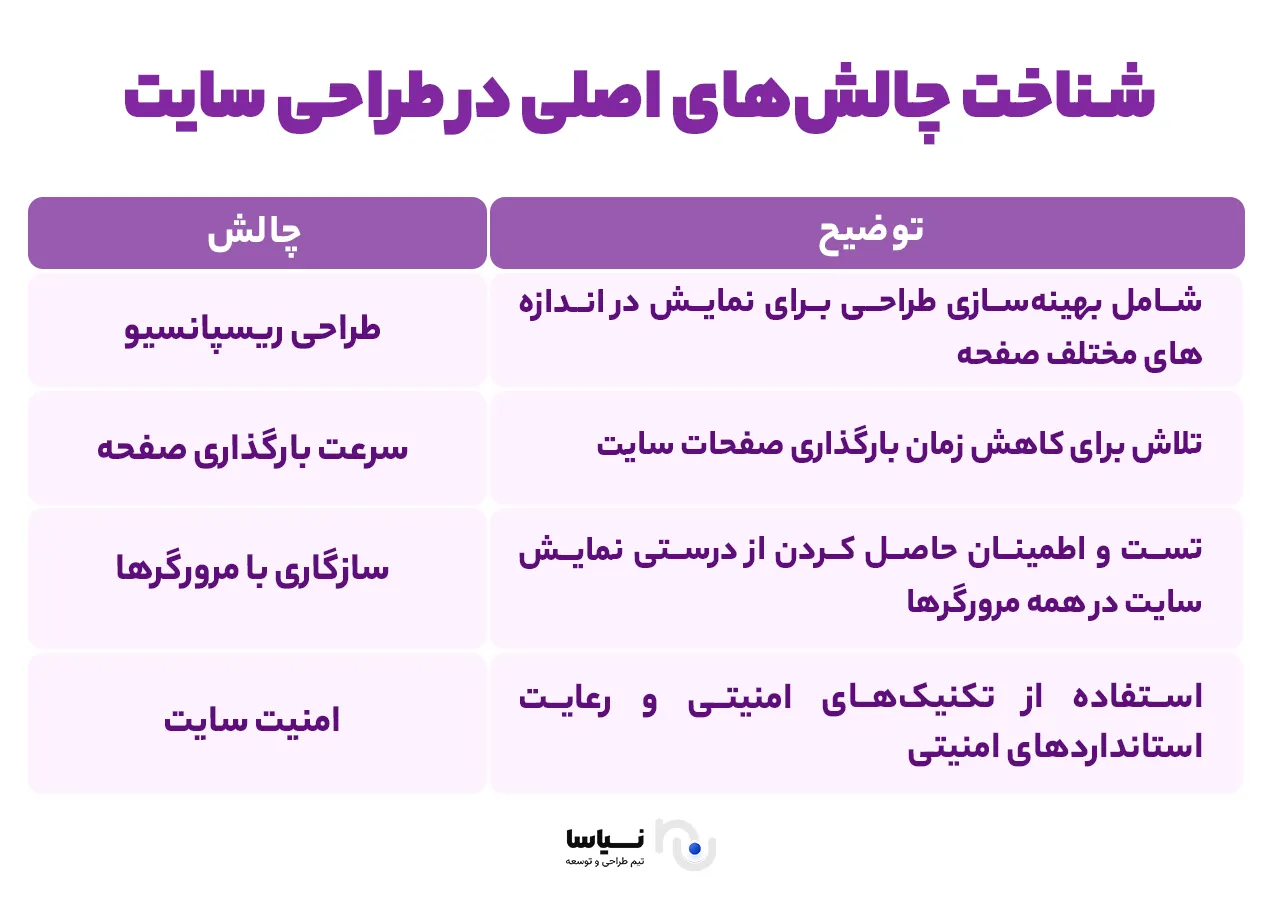
Practical guidance for meeting the challenges and succeeding in web design
Now that we have looked at the various challenges of working in web design, it is time to consider practical, effective ways of growing, succeeding and managing this profession better. The purpose of this section is to offer guidance that helps web designers not only cope with problems but build a more durable working life for themselves.
Learn continuously: stopping means falling behind
Web technology is changing quickly. Programming languages, frameworks, design tools and even visual trends are in flux every day. The successful designer is the one who is always learning. Reading continuously, taking online courses (on Udemy, Coursera or Faradars) and looking at other people's professional work are an essential part of the path to growth.
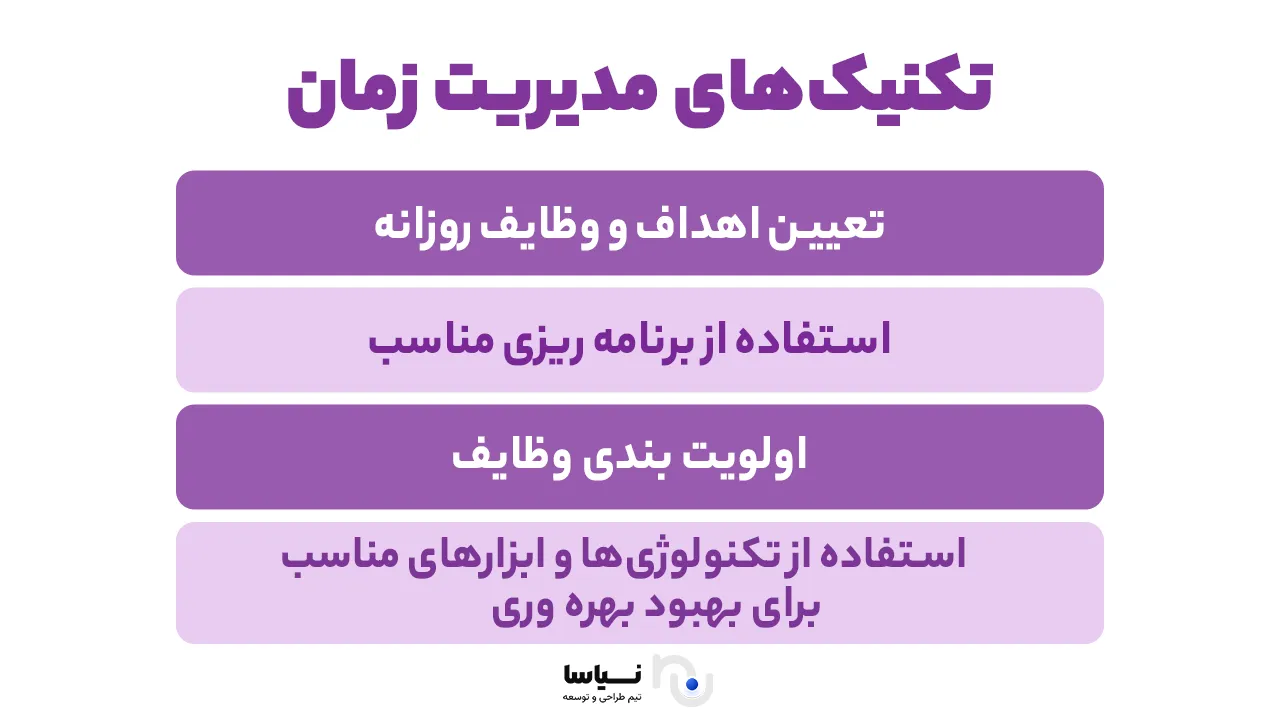
Managing time and energy
Time is a web designer's most valuable asset. Using techniques such as:
the Pomodoro method for greater focus,
prioritising tasks with the Eisenhower matrix,
and dividing projects into smaller phases,
helps you plan better and prevents burnout.
Strengthening your communication skills
A good designer is not merely a designer; they also have to be a good negotiator. How you speak to a client, how you manage expectations, how you explain the reasons for your choices and even how you answer criticism all take strong communication skills. Practising writing a professional proposal, answering emails courteously and active listening are among the skills to be developed alongside technical ones.
Building a professional portfolio
Nothing presents you to a client as well as a good portfolio. Having a personal website with your previous projects, a brief description of each, and a view of your working process (not only the final result) doubles your credibility.
Purposeful networking
Building relationships with other designers, developers, digital marketers and even business owners opens a great many routes to growth and to work. An active presence on LinkedIn, in specialist forums, in Telegram groups and at online or in-person events puts new opportunities before you.
Accept failure, but do not dwell on it
Projects sometimes run into difficulty, a client is dissatisfied, or an idea does not work as expected. Failure is a natural part of the road. What matters is learning from it, analysing the feedback and doing better on the next project. Successful designers make every failure a step towards progress.
Building a stable income
To reduce financial stress:
Offer monthly support services.
Alongside web design, try teaching design or producing educational content.
Consider developing plugins or themes you can sell.
Look into working with agencies and design companies for a more regular income.
How to be a successful, professional web designer
Success in web design does not end with technical skills. A professional designer is one who, alongside the ability to design and build a site, has a proper understanding of a client's needs, of the user experience, of the target market and of trends in technology. In this section we look at some of the most important qualities, behaviours and routes that help a web designer become a professional.
A command of current tools and technology
A successful web designer should have a reasonable command of a range of tools: HTML, CSS, JavaScript, WordPress, or frameworks such as React and Vue.js. Familiarity with UI/UX design tools such as Figma, Adobe XD or Sketch is also essential.
A professional point: rather than learning every tool, become a specialist in one particular field (e-commerce web design or responsive design, for instance).
User-centric design
The site's end user is the person who will experience your design. A site that is beautiful but confusing is of little value. In designing, a professional always thinks about ease of access, load speed, the user experience and the clarity of the routes through the site.
Problem-solving and flexibility
A project sometimes goes contrary to expectation, or a client makes strange and unsound requests. In those circumstances, the ability to analyse a problem, find a sensible solution and stay calm is an important quality in a successful designer. Rather than complaining or giving up, they find a new route.
Responsibility and professional commitment
A professional designer:
delivers a project on time,
explains clearly if there is a delay,
keeps to their commitments,
and is accountable for and corrects their mistakes.
These behaviours build a client's trust and lead to repeat work.
Listening actively and understanding a client's real need
Some clients do not know exactly what they want. A successful designer has to be able, by listening actively, asking the right questions and analysing a business's goals, to turn vague wishes into defined requirements.
Investing in your personal brand
Having a personal site, an active blog, an orderly body of work and a professional presence on social networks increases your credibility and attracts potential clients. A strong personal brand shows that you are serious about your work.
Learning continuously and staying up to date
Web technology is changing quickly. A professional designer keeps pace with it. Reading specialist blogs, taking part in webinars, following prominent designers and working on a range of projects all help improve your knowledge and your skills.
Taking feedback and improving continuously
A successful designer is one who does not run from feedback. Whether it comes from a client or from a colleague, they analyse it with an open mind and use it to improve their work.
In summary: getting past the challenges, the path of a web designer's growth
As a creative and complicated profession, web design has its own challenges and obstacles. They should not become an obstacle to success, though. On the contrary, every challenge a designer meets is an opportunity to learn, to progress and to develop further in their career.
In this article we have looked at the various challenges of working in web design: the difficulty of keeping up with new technology, managing time, dealing with clients and finding steady work. There are various ways of meeting these problems and, by adopting them, a web designer can readily get past the obstacles and become a successful professional.
Key points for growth and success:
Learn continuously: in the world of technology, learning never stops. Keeping up with the latest trends and design tools helps you stay at the head of the competition.
Manage your time and energy: using time and energy management techniques not only helps you do your work to a better standard, it also prevents burnout and stress.
Build a strong personal brand: an influential personal brand in the web design market can set you apart from your competitors and help you reach more clients.
Listen to your client and understand what they really need: effective communication and a proper understanding of a client's needs mean projects go more successfully and clients become loyal to you.
Take challenges as opportunities: every challenge you meet on the road of web design is in fact an opportunity to learn and to improve your skills. Look at challenges as a step forward.
In the end, success in web design takes a combination of technical, artistic and managerial skills. Successful designers are those who are flexible, who pay careful attention to detail and who are always looking for new and creative ways of solving problems.
Success is also not only the result of technical skills but of commitment, persistence and effective communication with clients and colleagues. By taking on the challenges, improving continuously and working to improve the quality of the work, then, any web designer can move forward successfully on this road.