What settles the best programming language for a website
The front-end languages that suit web design
The back-end languages that suit web design
The winning combination: the best programming language for designing and building a site
Web design with Niasa
In today's world of information and communications technology, choosing the best programming language for a website can play an important part in reducing costs and increasing productivity. Designing and building websites, one of the most appealing and popular fields for developers, takes a correct and careful choice of programming language. The right choice not only has a considerable effect on a site's performance and security, it can also affect a project's flexibility and its scope for future development. In this article on the Niasa website, we intend to examine and compare the best programming languages for web design and to answer a fundamental question: which is the best programming language for a website? And what makes web design pay somewhat better in Iran than other branches of information technology?
What settles the best programming language for a website
Choosing the best programming language for web design is one of the most important decisions in building a website. It bears directly not only on a site's quality, speed, security and performance but, over the long term, on how easily the system can be extended, maintained and improved. A number of factors have to be weighed here, and we set out the most important below.
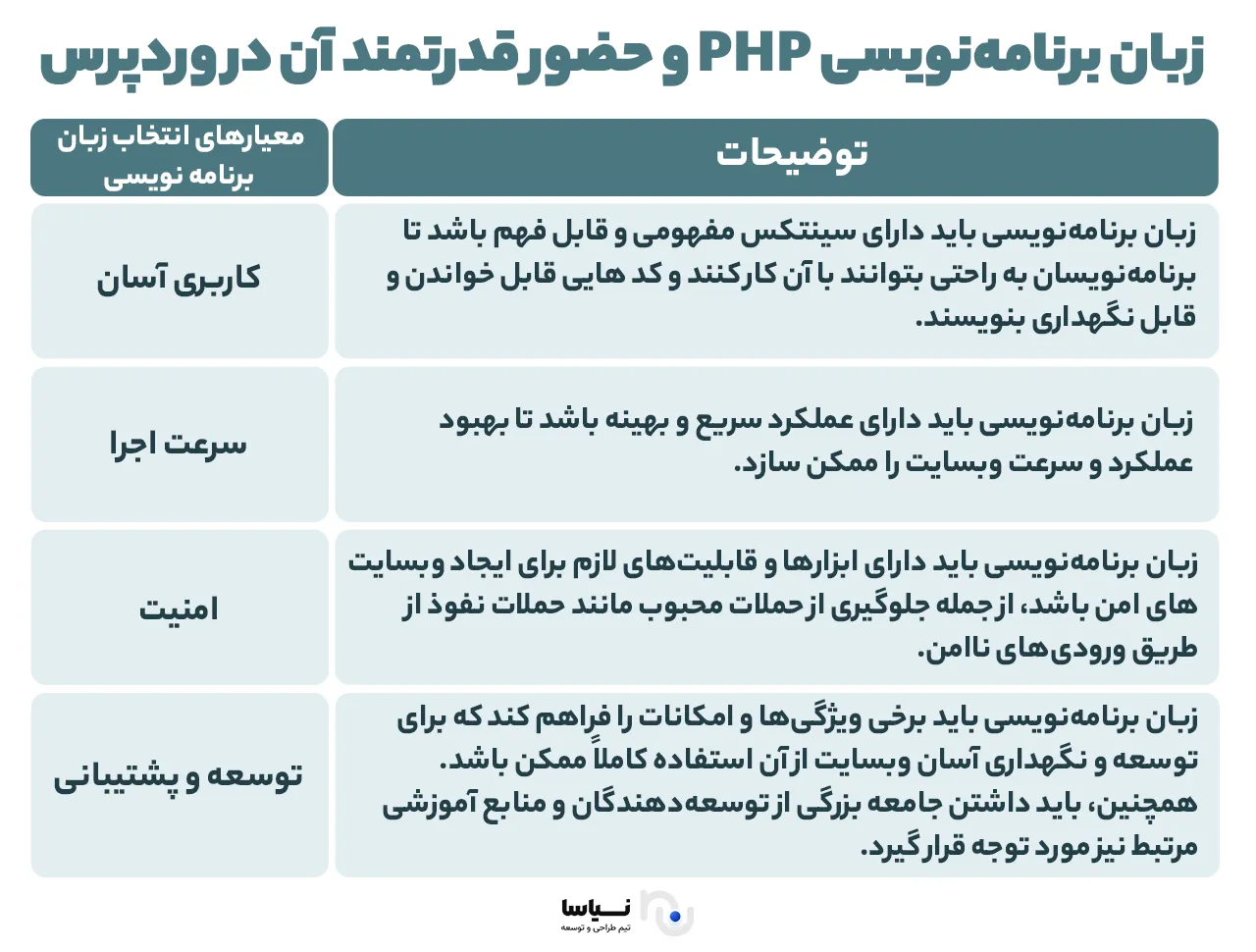
1 – Ease of use
One of the most important qualities to weigh in choosing the best programming language for a website is how easy it is to use. A language whose syntax and structure are understandable and simple makes learning and development faster and lets developers write code quickly and complete projects to a higher standard. As well as speeding development up, ease of use reduces a project's time and cost. That is why at Niasa we use the best programming language for specialist web design. For more information, you can contact us on the telephone numbers given on the site.
2 – Execution speed
How fast code runs in a given language is one of the things that most affects a website's performance. Choosing the best programming language for a website — one with faster loading and response — improves the user's experience. Websites that load quickly usually rank better in search engines and reach more users. Execution speed is therefore a fundamental factor in choosing a programming language for web design.
3 – Efficiency
For designing complicated, heavy sites, using the best programming language for a website — one able to make efficient use of server resources and produce better-optimised processing code — is essential. Languages capable of efficient processing perform better in this respect and give users a smooth, faultless experience.
4 – The job market in Iran and abroad
One of the key factors in choosing the best programming language for a website is the state of the job market. Languages in high demand in information and communications technology, in Iran and abroad, let developers take part in more opportunities and earn better. Choosing a more widely used language with an active job market can therefore bear on career success.
5 – Security
Security is one of the main challenges in web design. Programming languages with good security tools that are kept up to date matter a great deal in standing up to threats and cyber attacks. Using the best programming language for a website — one that guarantees advanced security — helps protect users' data and prevent unauthorised access. That matters particularly on sites storing sensitive data.
6 – Development
Choosing the best programming language for a website should be done with future development and extension in mind. Languages with powerful development ecosystems and good tools for improving and upgrading projects can help developers extend systems readily. That matters particularly for long-running projects, or for sites that intend to add new features over time.
7 – Support
Active support for a programming language is one of the things to weigh in choosing the best language for a website. Languages with large developer communities and complete documentation help developers a great deal. That support leads to problems being solved faster and makes development easier.
8 – In accord with the principles of SEO
Observing the principles of SEO and optimising a website for search engines is another vital factor in web design. The best programming language for a website should offer ways of optimising a site's structure and content so that it performs better in search rankings. Languages that accord with the principles of SEO can help a website find a better place in search results and improve users' access to its information.
In the end, choosing the best programming language for a website should be done on the basis of the project's needs, its particular characteristics and its technical and security requirements. Every programming language has its own advantages and drawbacks, but what is clear is that the right choice can improve a website's quality and performance considerably.
The front-end languages that suit web design
In web design, front-end programming languages play a very important part in creating a good user experience, in responsive design and in building dynamic interaction with users. They are used fundamentally to structure web pages, to make them look good and to add interactive capabilities to a site. In this section we look at the best front-end programming languages for a website: HTML, CSS, JavaScript and TypeScript.
1 – HTML
HTML (HyperText Markup Language) is the main language for structuring content on a website. This markup language lets developers place text, images, links and other elements on web pages. Using tags to describe and mark up a page's structure is one of HTML's main qualities. The <p> tag defines a paragraph, for instance, and <img> displays an image. Without any complicated programming, HTML organises a website's content, and that structure can be changed and improved. HTML alone cannot create complicated, dynamic behaviour, but as the best programming language for a website in terms of structuring and displaying content correctly, it matters particularly.
Advantages:
Simple and highly understandable to developers
A coherent, extensible structure
Drawbacks:
Unable to process or run complicated behaviour
A lack of programming capabilities
2 – CSS
CSS (Cascading Style Sheets) is used to make a website look good and to design its appearance. It lets you control how HTML elements appear: their colours, typefaces, borders and other visual qualities. CSS is, in fact, what makes your site look beautiful and orderly.
CSS not only makes a site look good, it also contributes to responsive design, which means web pages display properly across devices. These qualities make CSS one of the best programming languages for a website in terms of design and appearance.
Advantages:
It separates structure from appearance, which makes changes easier
It can create beautiful effects and animation
Drawbacks:
A challenge to manage on large projects
CSS conflicts have to be managed on large projects
Efficiency:
CSS is very efficient at improving a website's appearance and giving a better user experience. Using CSS for an appealing design and a well-made appearance helps you arrive at the best programming language for a website.
3 – JavaScript
JavaScript is one of the most important client-side programming languages, used to create dynamic interaction and add to a website's capabilities. It is sent to the user's browser and run there, which means websites can change dynamically and in the moment. JavaScript is used to add validation and dynamic interaction to web pages.
With capabilities such as the DOM (Document Object Model), JavaScript lets developers change the elements of a web page dynamically. With event handling, it is also possible to respond to a user's various actions: a click, a mouse movement or a key press. Because of its rich capabilities, this language is regarded as one of the best programming languages for building dynamic, interactive websites.
Advantages:
It creates dynamic interaction and applications
It can change a site's content and structure dynamically through the DOM
Drawbacks:
It may run into difficulty in some browsers
It carries the potential for security flaws
Efficiency:
JavaScript is very efficient for building dynamic web applications and creating interaction with users, and is therefore recognised as one of the best programming languages for front-end web design.
4 – TypeScript
TypeScript is a programming language developed by Microsoft and regarded as a superset of JavaScript. It adds qualities such as type annotations to JavaScript, which reduces errors and faults at runtime. TypeScript makes improving the quality of code and maintaining it easier, particularly on large and complicated projects.
TypeScript is compatible with the newer features of ECMAScript 6 and later and lets developers use JavaScript's advanced capabilities. These qualities make TypeScript one of the best programming languages for a website on large and complicated projects.
Advantages:
Type annotations, which increase the security and quality of code
Full compatibility with existing JavaScript code
Drawbacks:
More complicated than JavaScript
It takes time to learn and to adapt to
Efficiency:
TypeScript helps improve compatibility and code quality and is very efficient on large, complicated projects. It is one of the best programming languages for a website when it comes to writing stable, maintainable code.
Broadly, in web design the choice of the best programming language for the front end depends on a number of things. HTML, CSS, JavaScript and TypeScript each have their own qualities, which make them ideal options for designing different kinds of site. HTML for structuring content, CSS for appearance, and JavaScript and TypeScript for dynamic interaction and interactive applications are all tools that, taken together, produce an excellent user experience.
The back-end languages that suit web design
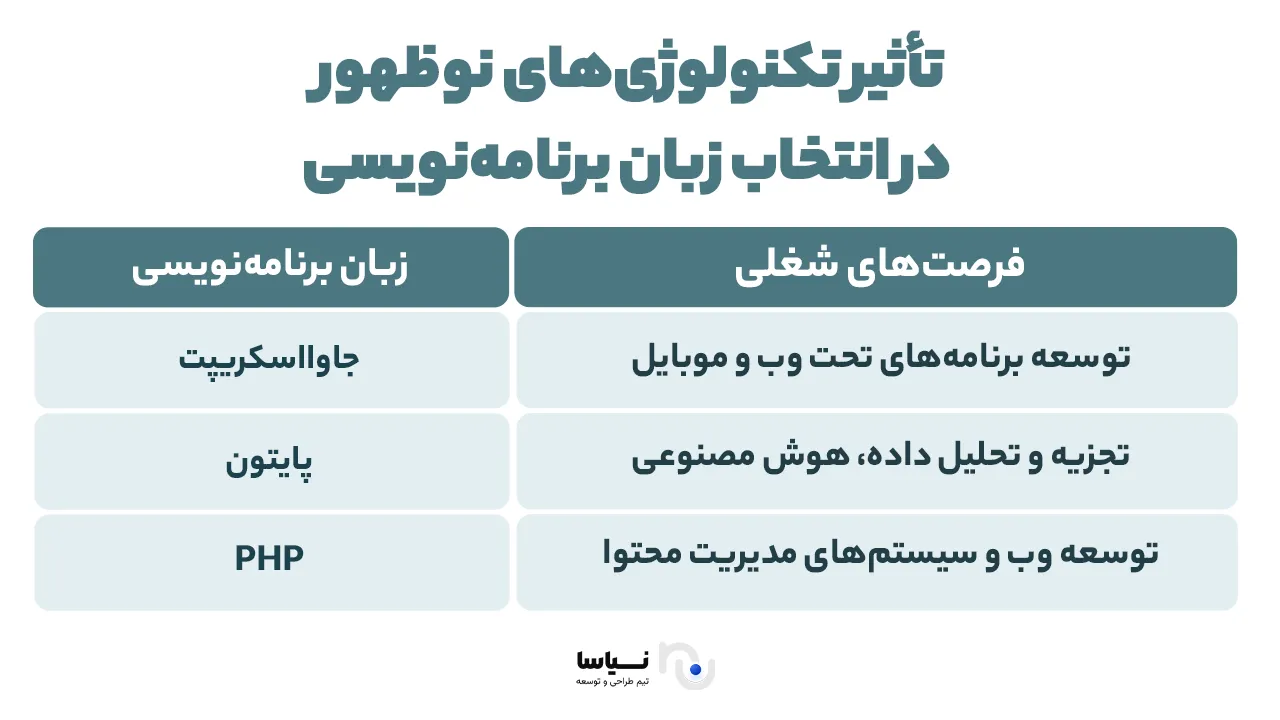
In web design, back-end programming languages play a vital part in processing data and interacting with databases. Which is the best programming language for web design depends on a project's needs, its scalability and its security. Some of the popular back-end languages are Python, Java, PHP and Node.js, each with its own qualities and advantages.
1 – Python
Python has a great many qualities that have made it one of the best programming languages for web design. One of its main advantages is how well it suits a range of programming fields. It can be used in web development, in data science, in artificial intelligence and in systems programming. Python is, in other words, very flexible, and lets developers build a variety of projects in a single language. Its simple, readable syntax is another advantage, reducing the likelihood of errors in code and making development easier. Python's drawbacks include its relative performance compared with compiled languages such as C++ or Java. That shortcoming is apparent in some fields, such as computer game programming or software with very demanding performance requirements.
Choosing the best programming language for a website on a given project may therefore differ according to its particular needs and its performance priorities.
2 – Ruby
Ruby is a dynamic, open-source programming language with a strong focus on simplicity and readable code. With its readable, simple syntax, it appeals to developers and speeds development up. One of Ruby's notable advantages is the powerful Ruby on Rails framework, which makes it possible to build websites and complicated software quickly. Ruby's drawbacks include high memory use and its relative performance. Compared with compiled languages, Ruby may sometimes be limited in processing speed. Because of its dynamic qualities, Ruby may also reveal some problems with data types at runtime.
Which is the best programming language for a website therefore depends on whether a developer gives more priority to simplicity and speed in writing code or needs higher performance.
3 – PHP
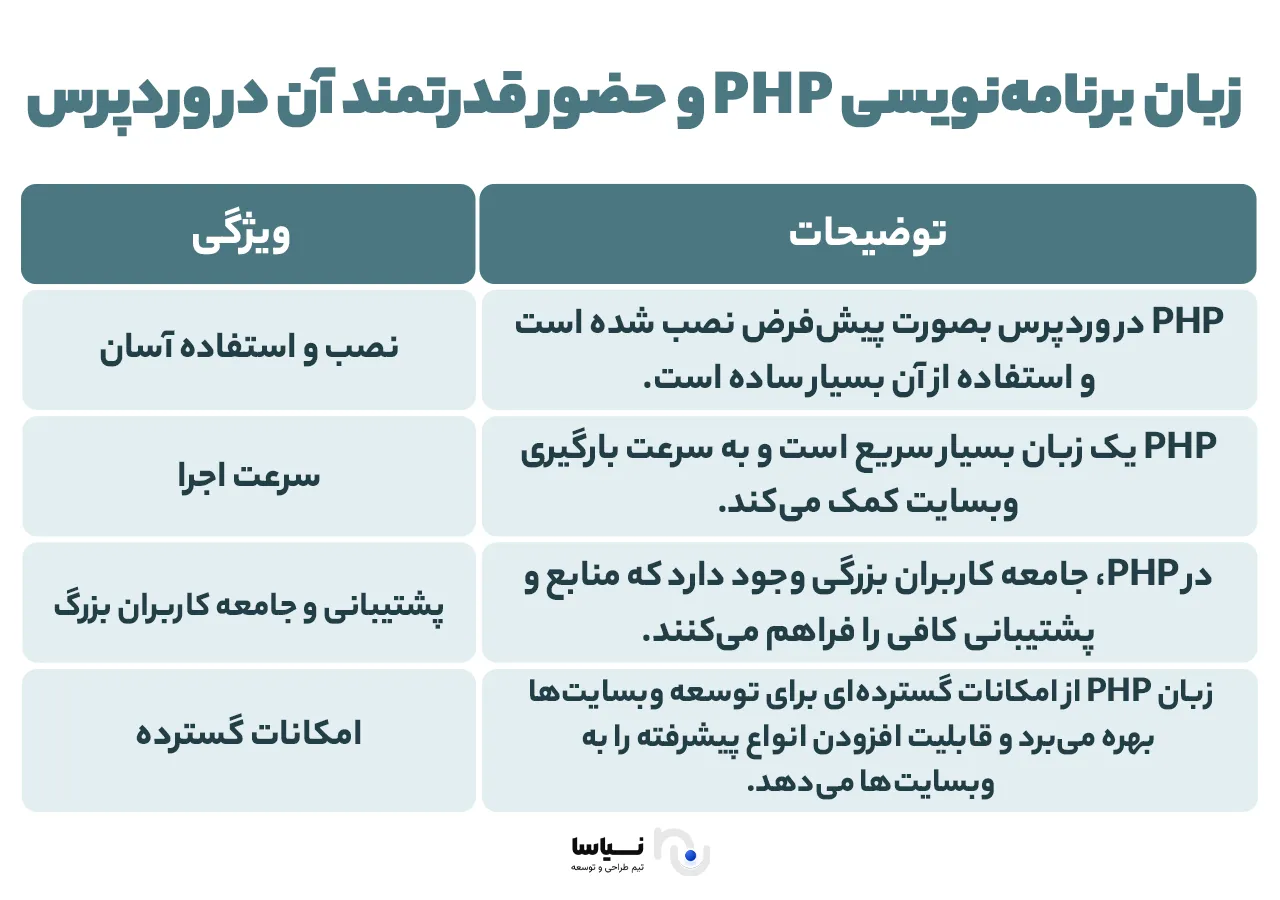
PHP is one of the most popular programming languages for web development and is used mostly for interactive, dynamic applications. Among its main advantages is how easy it is to learn and to use. PHP's simple syntax and its similarity to other languages mean developers become familiar with it readily. It also supports a range of databases, MySQL among them, which makes it very useful for building complicated websites.
PHP's drawbacks include problems with resource management and performance on large projects. Some developers also criticise PHP's global namespace, which may cause name conflicts and other problems. Broadly, choosing the best programming language for a large, complicated website project may depend on the need for resource management and complicated behaviour.
4 – Java
Java is recognised as one of the best programming languages for a website and is very well suited to building web applications. It has important qualities such as the ability to run programs on a range of platforms. One of Java's great advantages is being able to run on different devices and operating systems. Java also supports object-oriented principles such as inheritance and polymorphism, which makes developing and maintaining code easier. Java's drawbacks include the length of some of its code and the need for more lines than in other languages. Java may also sometimes be more limited in performance than languages such as C++.
For complicated projects needing high stability and scalability, Java can be put forward as one of the best programming languages for web design.
5 – SQL
As the standard language for managing databases and querying information, SQL plays an important part in designing complicated sites. One of its notable advantages is how easily data can be extracted and managed. With SQL, developers can readily search, change and manage information. Although SQL follows a declarative model and does not require the method of execution to be specified, more complicated programming may take more complicated code. In some cases, SQL alone is not enough for complicated requirements and other programming languages are needed.
6 – Go
The Go language, also called GoLang, is one of the popular languages for building concurrent systems and high-performance applications. With its simple structure and high performance, Go is a suitable choice for building systems that process large volumes of data and for widely used applications.
Go has automatic memory management (garbage collection), which frees developers from worrying about managing memory by hand. Goroutines also make it simple to build concurrent programs. Go lacks more complicated tools such as generics, however, which may make it less flexible on some projects.
7 – C#
C# is an object-oriented language developed by Microsoft and running on the .NET platform. Among its advantages is the ability to build Windows applications, websites and mobile apps. It also supports qualities such as lambdas and events, which make writing code simpler and more understandable.
C# also has wide capabilities for development using integrated development environments (IDEs) such as Visual Studio. Because of its limits on non-Windows platforms and a shortage of certain tools and libraries, though, C# may not suit some projects.
8 – C++
C++ is a multi-paradigm programming language suited to projects with very demanding performance requirements. It lets developers control system resources precisely and write high-performance code. C++'s drawbacks include greater complexity and the need for great care in managing memory. Learning C++ also takes longer than learning languages such as Python or Java.
9 – ASP.NET
ASP.NET is one of the best frameworks for building websites and was developed by Microsoft. It makes it possible to build complicated websites quickly and effectively. With ASP.NET, developers can draw on Microsoft's range of tools and libraries and produce high-quality, well-performing code. ASP.NET is more complicated than other frameworks such as Node.js or Django, however, and learning it may take longer.
Which is the best programming language for designing a website depends on a project's particular needs. Every language and framework has its own advantages and drawbacks, but bearing in mind the need for performance, scalability and ease of development, developers should choose the language or framework that suits their project.
The winning combination: the best programming language for designing and building a site
The combination of HTML, CSS, JavaScript and PHP is recognised as a powerful set for designing websites. Each of these languages and frameworks carries out its own tasks in the process of building a site, and working together they offer remarkable capabilities for building professional, responsive websites. Here we look at the advantages and strengths of each of these tools:
1 – HTML (a markup language)
HTML is responsible for structuring and defining a website's content. It is the foundation of a page's various elements: text, images and links. Using HTML tags, content can also be divided into sections and presented in an organised way on a web page.
2 – CSS
CSS lets you set a website's style and appearance. Colours, typefaces, layouts and animation are all set by CSS. It also makes it possible to design sites that adapt automatically to different screen sizes, from a phone to a desktop.
3 – JavaScript
JavaScript is the tool for creating dynamic interaction on a website. It makes it possible to build features such as smooth scrolling, animation and responses to mouse movement. JavaScript can also send and receive data without reloading the page. That quality helps you build fast, responsive sites.
4 – PHP
PHP is the main language for processing and managing data on the server side. With PHP, a user's input can be processed and the results sent dynamically to the web page. PHP connects readily to databases and makes it possible to retrieve dynamic information from them and display it on a site.
The combination of these languages and technologies lets web developers build sites with a strong structure, an appealing appearance and good interaction. Depending on a project's needs, various frameworks and tools may be used with each of these languages to give the best performance in each area.
Web design with Niasa
Designing a website as well as it can be done is an exciting challenge, and with Niasa it becomes an ideal experience. In today's world, websites play the main part in our digital communication, and making them beautiful and efficient has become an art. Combining art and technology, Niasa offers tools and frameworks that help web designers build websites to a high standard and with remarkable design, quickly and simply. Niasa not only gives users intelligent tools, it also lets them work readily with complicated code and projects.
Frequently asked questions
1 – Is Python the best programming language for web design?
With frameworks such as Django and Flask, Python is a good option for web design, but it may perform less well at larger scales than languages such as JavaScript or PHP.
2 – Why is JavaScript recognised as one of the most popular web programming languages?
JavaScript is used to create dynamic interaction on web pages and, with powerful frameworks such as React and Angular, makes it possible to build modern, scalable websites.
3 – Is PHP still a credible option for web development?
Yes, PHP is still one of the popular languages for web development, particularly for dynamic sites and content management systems such as WordPress.
4 – Does Ruby on Rails suit building websites quickly?
Yes, with its simple structure and its capacity for rapid development, Ruby on Rails suits small and medium projects very well.
5 – Why has TypeScript, as a superset of JavaScript, attracted the attention of web developers?
TypeScript provides JavaScript code with capabilities such as data types and static typing, which helps reduce errors and improve scalability.