Improving the user experience (UX) with artificial intelligence
Using artificial intelligence to improve the interface (UI)
Artificial intelligence and a site's SEO
Using artificial intelligence in producing and refining content
Increasing a site's speed and performance with artificial intelligence
Using chatbots and intelligent assistants on a site
Designing sites automatically with artificial intelligence: a future without code?
The challenges and limits of artificial intelligence in improving a site
Will artificial intelligence replace web designers?
In today's digital world, web design is no longer limited to programming and graphic design skills. As technology has advanced, artificial intelligence (AI) has become one of the most important tools for improving and building websites. By analysing data, identifying patterns in users' behaviour and refining a site's elements automatically, it helps businesses provide a better and more personalised experience for their users. Using artificial intelligence in web design not only brings greater efficiency and speed to building for the web, it can also take the user experience (UX) and the interface (UI) to a higher level. AI-based tools make it possible to design web pages automatically, to optimise SEO, to personalise content and even to support users automatically. In this article we look at how artificial intelligence affects the design and improvement of a site and discuss the part it plays in improving how websites perform, in increasing user engagement and in refining digital content.
Improving the user experience (UX) with artificial intelligence
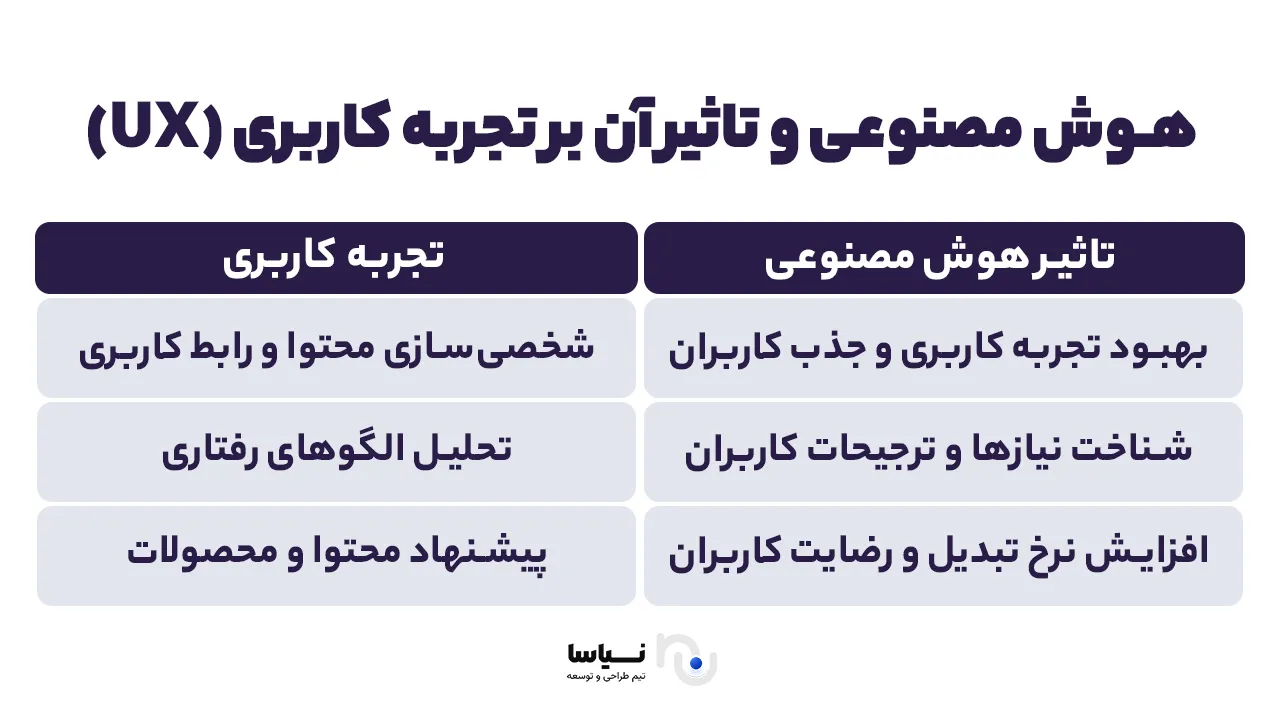
The user experience (UX) is one of the most important factors in a website's success. Users are after sites that are easy to reach, appealingly designed and fast. Within that, artificial intelligence, as an advanced technology, plays an important part in improving the user experience.
Analysing users' behavioural data
Artificial intelligence can analyse users' behavioural data on a site and identify particular patterns. AI-based tools such as Google Analytics can examine users' paths through a site, identify the points at which they leave and offer suggestions for improving pages.
Offering a personalised experience
One of the most important uses of artificial intelligence in UX is personalising the user experience. Using machine learning algorithms, sites can present content, offers and advertising matched to each user's interests. Online shops, for instance, can use AI to show recommended products based on a user's purchase and search history.
Improving a site's navigation
Navigation is one of the things that bears directly on the user experience. By analysing users' data, artificial intelligence can suggest the best routes to information and refine the arrangement of menus and links. Some sites use intelligent chatbots to guide users to the content they want.
Refining forms and the process of entering information
Complicated, long forms are one of the things that leave users dissatisfied. Artificial intelligence can refine forms around users' needs, use autocomplete and even offer corrections so that entering information becomes quicker and easier.
Identifying and removing obstacles in the user experience
Through data analysis tools, artificial intelligence can identify the problems on a site and suggest ways of improving it. If a page takes a long time to load, for instance, AI can identify the causes of the slowness and offer suggestions for improving it.
Taken together, using artificial intelligence in the user experience makes sites more intelligent, faster and more user-friendly. It helps website owners increase engagement and user satisfaction by offering a personalised, well-made experience.
Using artificial intelligence to improve the interface (UI)
The user interface (UI) plays a very important part in a website's visual appeal and its efficiency. A good UI design can encourage users to engage more with a site and improve the user experience (UX). With advanced tools and machine learning algorithms, artificial intelligence has made designing and refining an interface simpler and more efficient.
Designing an interface automatically with AI-based tools
Intelligent tools such as Adobe Sensei and Uizard use artificial intelligence to suggest user-friendly designs. On the basis of users' data, they can suggest optimal layouts and choose suitable visual elements.
Analysing users' behaviour to refine a design
By analysing users' data, artificial intelligence examines their behaviour on a site's various pages. That information helps designers arrange UI elements so that they work better. If users click less often on a particular button, for instance, AI can suggest changing its colour, its size or its position.
Producing wireframes and interactive prototypes automatically
Tools such as Figma AI and Sketch2Code can create early models of an interface from written descriptions or hand-drawn sketches. That helps designers build early designs in less time and make the changes needed on the basis of users' feedback.
Personalising an interface around users' preferences
Artificial intelligence can adjust a UI design to users' tastes and needs. Some sites change their colours, typefaces and even page layouts according to a user's behaviour so as to give an experience matched to their needs.
Using artificial intelligence in A/B testing and refining a design
A/B tests help designers examine the effect of changes to a UI design. AI-based tools such as Google Optimize can analyse the results of tests automatically and offer better design suggestions.
Taken together, artificial intelligence can take interface design to a higher level and refine the user experience. With it, sites will not only be more beautiful and more appealing but will also perform better.
Artificial intelligence and a site's SEO
Search engine optimisation (SEO) is one of the most important factors in a website's success in reaching visitors. As technology has advanced, artificial intelligence has become a powerful tool for improving SEO and can speed up analysis, content production and technical optimisation. In this section we look at the effect of artificial intelligence on SEO.
Analysing data and suggesting the right keywords
AI-based tools such as Google Bard and Semrush AI can identify frequently searched keywords automatically and offer suggestions for using them well. By analysing competitors and search trends, they help refine a site's content.
Producing content optimised for SEO
Artificial intelligence can play an important part in producing SEO-optimised content. Tools such as ChatGPT, Copy.ai and SurferSEO can produce text that observes SEO standards and help writers produce better content.
Refining the structure of internal and external links
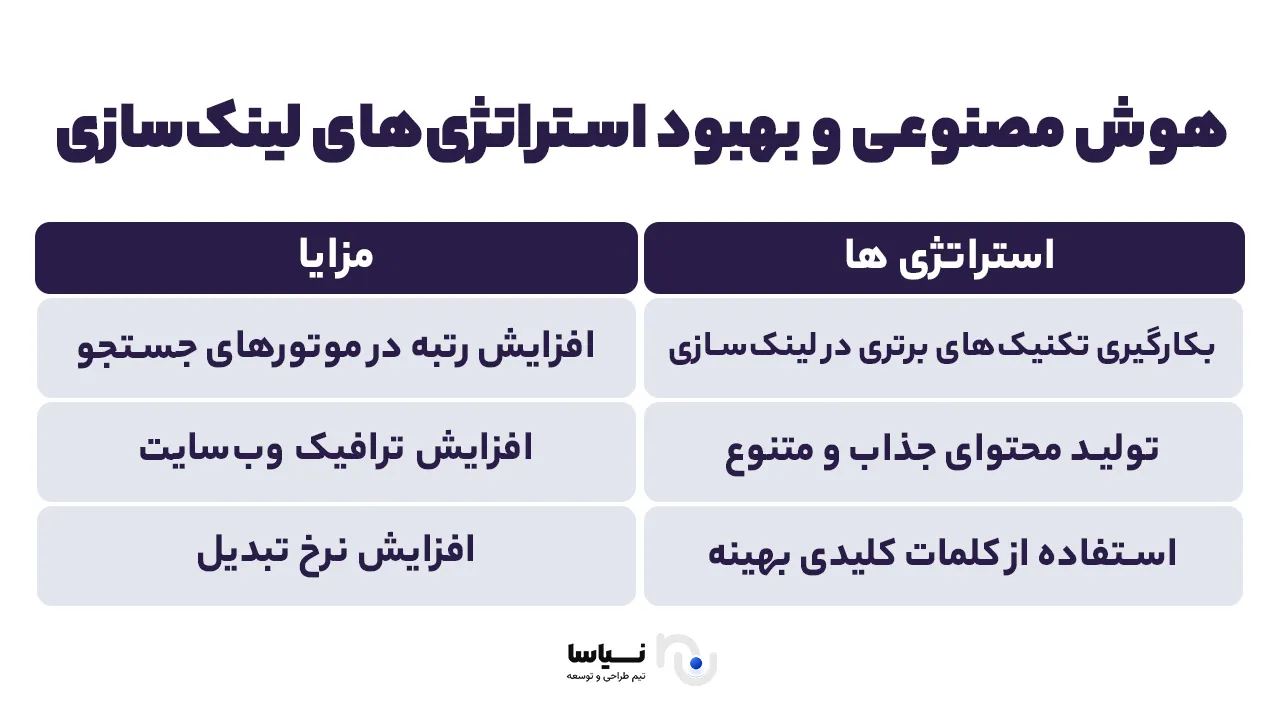
Internal and external links are one of the important factors in SEO. By analysing a site's structure, artificial intelligence can offer suggestions for improving link building. Tools such as Link Whisper, for instance, suggest suitable internal links automatically.
Optimising a site technically for search engines
Artificial intelligence can identify a site's technical problems and offer suggestions for improving them. Optimisations such as increasing page load speed, improving HTML and CSS and reducing image sizes are carried out by AI tools.
Analysing users' behaviour and improving the click-through rate (CTR)
By examining users' data, artificial intelligence can establish what increases or reduces the click-through rate (CTR) in search results. It then offers suggestions for improving titles, meta descriptions and content structure so that more users click on a site's links.
Artificial intelligence can resolve many of the challenges of SEO and help improve a site's ranking in search engines. Using AI tools to analyse data, refine content and resolve technical problems means sites perform better and attract more traffic.
Using artificial intelligence in producing and refining content
Content is one of the most important factors in a website's success and plays a key part in reaching users and in SEO. As artificial intelligence has advanced, producing and refining content has become more precise and quicker. This technology not only helps produce content automatically, it can also improve the quality of the material and the user's experience.
Producing content automatically with artificial intelligence
Tools such as ChatGPT, Jasper AI and Copy.ai can produce articles, product descriptions and blog posts from the data given to them. Learning from reputable articles, they produce text that is orderly in structure and well optimised for SEO.
Refining the writing and the style of content
Artificial intelligence can examine the quality of writing and offer suggestions for improving its style. Tools such as Grammarly AI and Hemingway Editor can simplify complicated sentences, correct grammatical errors and make text more readable.
Personalising content around users' behaviour
Using artificial intelligence, content can be presented in a personalised form for each user. News sites, for instance, use AI to recommend articles matched to a user's interests. That increases engagement and reduces the bounce rate.
Analysing competitors' content and offering suggestions for improvement
AI-based tools such as SurferSEO and Frase can analyse competitors' content and offer suggestions for improvement. They examine the structure of well-read articles and offer points about word count, the use of keywords and link building.
Optimising content for voice search
As voice search has grown, producing content suited to it matters a great deal. Artificial intelligence can identify users' speech patterns and offer suggestions for optimising a site's content so that it appears in voice search results.
Artificial intelligence has brought about a fundamental change in producing and refining content. With it, good-quality, SEO-optimised content matched to users' needs can be produced. Refining content with AI not only improves a site's ranking in search engines, it also improves the user experience.
Increasing a site's speed and performance with artificial intelligence
Load speed and a site's performance are key factors in the user experience and in SEO. Users expect web pages to load in the least possible time, and any delay can reduce engagement and increase the bounce rate. Artificial intelligence can play an important part by offering intelligent ways of improving a site's performance.
Compressing and optimising images with artificial intelligence
Heavy images are one of the main causes of a slow site. AI tools such as TinyPNG AI and Kraken.io AI can compress images and reduce their size without a loss of quality. That improves page load speed.
Using intelligent caching systems
Artificial intelligence can refine caching and let users' browsers store a version of a site. Tools such as Cloudflare AI and NitroPack use artificial intelligence to manage the cache and make pages load faster.
Optimising HTML, CSS and JavaScript
Unnecessary, untidy code can make a site slow. Artificial intelligence can optimise that code, remove the superfluous parts and reduce page load times. Tools such as PageSpeed Insights AI and Minify AI perform effectively here.
Anticipating and managing a site's traffic
When a site's traffic rises, the likelihood of it slowing down increases. Artificial intelligence can analyse traffic patterns and manage server resources intelligently. Google Cloud AI and AWS AI, for instance, can adjust servers according to the level of traffic and prevent a site slowing down.
Refining lazy loading
One way of improving a site's speed is to load content gradually (lazy loading). Artificial intelligence can refine that process so that only the parts of a page within the user's view are loaded and the rest appears gradually.
Artificial intelligence plays a key part in improving a site's speed and performance. From optimising images and code to intelligently managing traffic and caching, all of these can help increase load speed and improve users' experience. Sites that draw on these techniques not only hold a better position in Google's rankings, they also leave users more satisfied.
Using chatbots and intelligent assistants on a site
Chatbots and intelligent assistants have become one of the most important tools for engaging with users on a site. These AI-based technologies can improve the user experience, increase the conversion rate and help reduce the workload on support teams.
AI-based chatbots: quick, intelligent engagement with users
Intelligent chatbots such as the ChatGPT API and Drift AI can answer users' questions around the clock, provide the information needed and even make buying easier. Using natural language processing (NLP), they can understand a conversation and give suitable answers.
Personalising offers with intelligent assistants
By analysing users' data, artificial intelligence can make personalised offers. Online shops, for instance, use virtual assistants to recommend related products based on a user's purchase history and behaviour. That helps increase sales and customer satisfaction.
Using chatbots in customer support
Chatbots can resolve customers' common problems automatically and, in more complicated cases, connect users to a human operator. That reduces support costs and speeds up responses.
Artificial intelligence in analysing users' conversations
Intelligent chatbots can analyse users' conversations and use that data to improve their answers and their service. That helps companies better understand what their customers need and refine what they offer.
Using chatbots and intelligent assistants on a site improves engagement, increases sales and reduces support costs. This technology will play a larger part in designing sites and refining the user experience in future.
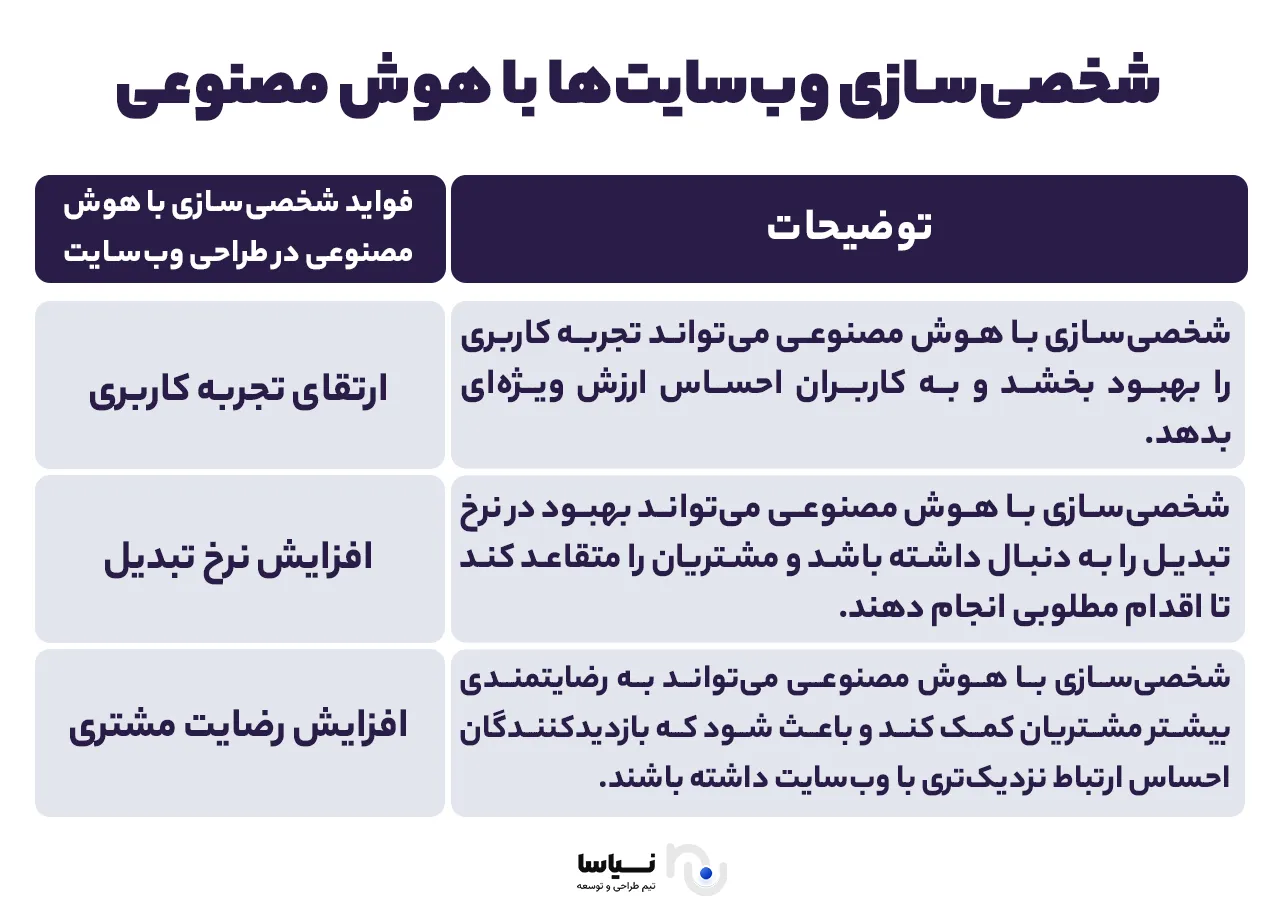
Designing sites automatically with artificial intelligence: a future without code?
One of the newest uses of artificial intelligence in web design is tools that automate the design process. Using AI and machine learning algorithms, they can design sites that need no hand-written code. That can reduce costs, speed up the design of a site and make it possible for people without technical expertise to build complicated sites.
Tools such as Wix ADI and Bookmark AI use artificial intelligence to automate web design around users' needs and tastes. They use complicated algorithms to analyse users' input and design the pages.
With these AI tools, there is no longer any need to write code by hand to design a site. Simply by choosing the qualities and styles they want, users can create professionally designed websites. That lets non-technical designers and even business owners build their own site without any coding skill.
AI tools can adapt a site's design automatically to each user's particular needs. They can suggest suitable designs based on the kind of business, the target audience and the site's characteristics. That helps designers provide a better experience for visitors.
Artificial intelligence can also automate updating and maintaining a site. Tools such as The Grid continuously update a site's design and content on the basis of data analysis and changes to search engine algorithms.
Designing sites automatically with artificial intelligence may bring about a future without complicated code. It helps users and designers create professional sites readily while freeing them from the complications of coding. For more complicated projects, though, technical expertise will still be needed.
The challenges and limits of artificial intelligence in improving a site
For all artificial intelligence's countless advantages in improving web design, the technology also comes with challenges and limits. Understanding them is essential for site managers if they are to make the best use of what artificial intelligence can do.
To work effectively, artificial intelligence needs good-quality, precise data. If the data given to it is incomplete or incorrect, the results from AI tools will be less accurate. AI algorithms designed to analyse users' behaviour, for instance, will be only as accurate as the data given to them.
Although using artificial intelligence can make designing a site simpler, building it in at the outset may be complicated and expensive. Companies have to allow for the costs of developing, training and implementing AI systems. That can be a challenge for small businesses with a limited budget.
Artificial intelligence can help create standard designs matched to users' needs, but it is still unable to replace human creativity and distinctive design. Designs created by artificial intelligence may be less able to meet a brand's particular needs and a business's particular characteristics.
Artificial intelligence still needs human oversight to ensure that a site is designed correctly and in accord with a business's goals. Some decisions — creative choices, branding strategy and judging the effects of a design — take a human understanding that artificial intelligence cannot fully process.
To analyse and anticipate users' behaviour, artificial intelligence needs to gather personal data. That can raise concerns about security and privacy. Sites have to observe the law on users' privacy and be sure that data is stored and processed securely.
Will artificial intelligence replace web designers?
Artificial intelligence is changing the design and improvement of sites and lets web designers automate complicated processes and improve the user experience. The question that remains, though, is whether artificial intelligence can replace web designers.
For all the considerable advances, artificial intelligence will not be able to replace web designers entirely. It can act as a tool that speeds up and simplifies the design process, but human creativity, strategy and knowledge are still needed to produce distinctive and complicated designs.
Artificial intelligence can carry out slow, repetitive processes such as SEO optimisation, the initial design of a site and suggesting improvements. That means web designers have more time to focus on the creative and strategic aspects of a project.
While artificial intelligence can help improve the user experience, web designers still play a vital part in creating an experience that is distinctive and matched to a brand. With a deep understanding of users' needs, of values and of a business's goals, designers can provide an experience beyond anything artificial intelligence could create on its own.
In summary
In future, the best possible result will come from combining artificial intelligence's capabilities with human creativity. Artificial intelligence helps web designers carry out repetitive work automatically, while designers can focus on innovation, distinctive design and branding strategy.
Artificial intelligence is a powerful tool that helps in designing and improving sites, but it will not replace web designers. It lets them automate slow work and focus on the creative and strategic aspects instead. Collaboration between people and artificial intelligence can therefore shape the future of web design and bring better results.