What is web design?
The evolution of web design: a brief history
The present state of web design
AI-based design tools
Why keeping up with the latest web design trends matters
How to design a modern, lasting website
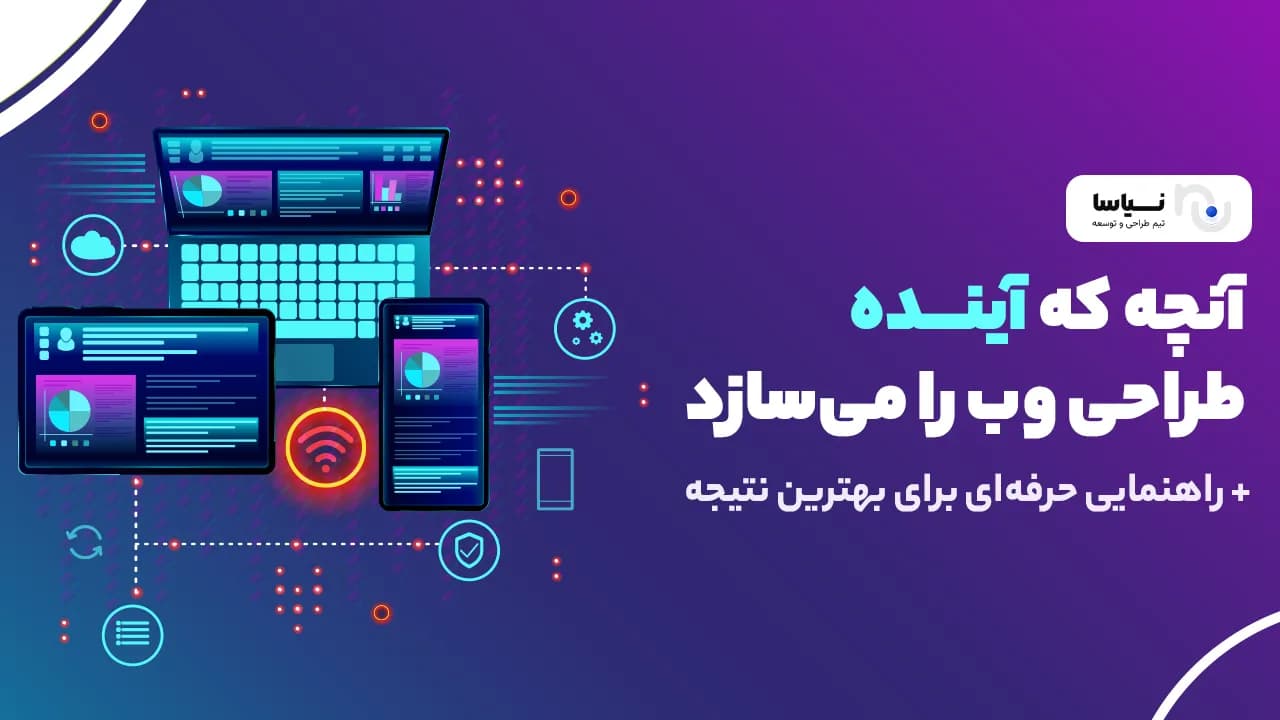
As technology has advanced quickly, web design has undergone a great many changes. But what will the future of the field be? Will your website still be efficient and competitive in five years' time? If you want to prepare your business for the future and lead in this industry, you have to keep pace with the changes. Web design is no longer limited to visual beauty; it takes adaptation to new technology, to changing user behaviour and to new standards. This article looks at the emerging trends in web design up to 2030 and offers ways of building a modern, efficient and forward-looking website.
What is web design?
Web design is the process of planning, conceiving and arranging content for the web. Its main aim is to ensure that users can interact with a site smoothly, intuitively and enjoyably. Web design is more than creating visually appealing websites; it means creating an effective digital experience that meets users' needs.
The key elements of web design are:
Layout: the arrangement of content on a page, ensuring that it is easy to navigate.
Colour: choosing colours that stir feeling and ensure readability.
Typography: choosing typefaces that are both visually appealing and readable.
Interface design (UI): creating interactive elements such as buttons, links and forms.
User experience design (UX): ensuring that visitors have a positive, frictionless experience of using a website.
The evolution of web design: a brief history
Web design has come a long way since its early days in the 1990s. The first websites were rudimentary, mostly text and links with limited interaction. Over the years, web design has become more complicated and more refined.
The 1990s: static websites, limited multimedia content, minimal interaction.
The early 2000s: Flash-based websites, the introduction of dynamic content and animation.
The mid-2000s: greater use of CSS-based layouts and a move away from table-based layouts.
The 2010s: mobile responsiveness, the introduction of HTML5 and CSS3, interactive interfaces.
The 2020s: AI-based design tools, advanced animation, voice search, mobile-first design.
By 2025, web design will take in more advanced technology that will produce faster, more intelligent and more personalised websites.
The present state of web design
The present state of web design is characterised by a combination of creativity, usability and advanced technology. Websites are increasingly user-centred and focus on ease of use, fast loading and mobile-first design. Here are some of the key qualities that define the present state of web design:
1 – Mobile-first design
As the use of smartphones and tablets has spread, designers now give priority to mobile compatibility. Websites are generally designed for mobile devices first and then scaled up for desktop screens.
2 – Responsive design
Websites are built to adapt to different screen sizes and to ensure a consistent, workable experience on smartphones, tablets, laptops and desktop computers.
3 – Minimalism and a simple aesthetic
Modern web design broadly takes a minimalist approach, focused on clean layouts, white space and simple colour schemes. That not only improves the user's experience but also increases readability and accessibility.
4 – Speed and performance
Users expect websites to load quickly, and even a few seconds of delay can lead to a high bounce rate. Optimising images, using efficient code and drawing on content delivery networks (CDNs) are part of the best practice of modern web design.
5 – Interactivity and animation
Interactive elements such as hover effects, micro-interactions and subtle animation are generally used to hold visitors' attention and improve the overall user experience.
6 – The latest developments in web design
Web design continues to evolve as new technologies and design philosophies emerge. Here are some of the latest trends and developments:
AI-based design tools
Artificial intelligence (AI) is transforming web design, with tools such as Wix ADI (Artificial Design Intelligence), Adobe Sensei and AI-based design generators. They help automate design tasks, improve interface personalisation and simplify the process of building for the web.
1 – Voice user interfaces (VUI)
As voice assistants such as Amazon Alexa, Google Assistant and Apple Siri have become more widespread, web design is adapting to voice search and voice-based interaction. Websites now have to consider how users interact with them through voice commands.
2 – Dark mode
The growing popularity of dark mode across apps and operating systems has led many websites to offer dark themes. Web designers now take these preferences into account so as to provide a more personalised and more comfortable browsing experience.
3 – Augmented reality (AR) integration
Augmented reality is beginning to have an effect on web design. AR can be used for interactive product displays, virtual try-ons and other immersive experiences that engage users in a new way.
4 – Advanced web typography
Web fonts have become more sophisticated, and services such as Google Fonts and Adobe Fonts offer a wide set of high-quality typefaces. Designers now have more freedom to choose type that accords with a website's branding and its tone.
5 – Progressive web apps (PWAs)
PWAs combine the best qualities of the web and of mobile apps and give users the advantages of both. They are fast, dependable and able to work offline, which makes them an appealing solution for businesses that want to offer something like a native app experience on the web.
6 – The future of web design
Looking ahead, web design is moving towards transformative changes driven by emerging technology and changing user expectations. Here are some of the key trends expected to shape the future of web design:
7 – Personalised experiences
Personalisation will continue to be one of the main trends in web design. With advances in AI and data analysis, websites will offer users increasingly personalised experiences, presenting content, offers and layouts according to their preferences, their behaviour and their demographic characteristics.
8 – Advanced artificial intelligence
Artificial intelligence will not only help create designs but will also play an important part in improving the user experience. AI-based chatbots, for instance, will gradually become more sophisticated in providing customer support, and AI-based content recommendations will help keep users engaged.
9 – Voice search and conversational design
As voice search technology advances, websites will have to be optimised for it. That may lead to new design paradigms in which websites answer natural-language questions naturally and engage users in more conversational interactions.
10 – Virtual and augmented reality
Virtual and augmented reality will become essential parts of the web experience. As internet speeds improve and hardware becomes cheaper, websites will begin to offer fully immersive experiences in entertainment, e-commerce and education.
11 – Web3 and blockchain integration
The growth of Web3 technologies, which rest on decentralised networks and blockchain, may change how websites are built and interacted with. Web design may evolve to take in digital wallets, cryptocurrencies and decentralised applications (dApps), giving users more control over their data and their interactions online.
12 – Advanced web animation and micro-interactions
Web animation will become increasingly sophisticated and more widely used. We can expect to see smoother, subtler and more appealing animation that guides users through a website, strengthens storytelling and creates an immersive experience.
Why keeping up with the latest web design trends matters
Web design is a dynamic field, and keeping up with the latest trends matters a great deal to designers if they are to stay competitive and meet users' expectations. Here are a few reasons why:
1 – A better user experience
Users' preferences and expectations are changing, and websites have to adapt so as to ensure they carry on providing frictionless, engaging experiences.
2 – Search engine optimisation (SEO)
Modern design practice — mobile optimisation, fast loading and clean code — helps improve a website's SEO ranking, which is vital to being seen.
3 – A brand's credibility
A well-designed website reflects a brand's identity and its values. Keeping up with design trends contributes directly to a website looking fresh, modern and relevant.
4 – A competitive advantage
Businesses in competitive industries can use innovative web design to stand out. Adopting new technologies and trends early can put a company ahead of its competitors.
5 – Keeping users
Websites that are visually appealing, easy to navigate and up to date with the latest capabilities are more likely to engage users and encourage them to come back.
How to design a modern, lasting website
For your website still to be appealing and efficient in 2030, you have to pay attention to a few key aspects. Below are some points that will help you design a website that keeps its appeal over time and meets users' needs as well as possible.
1 – Draw on new technology
Using artificial intelligence, augmented reality and newer interfaces can improve the user experience.
2 – Do not forget responsive design
Your website has to display properly on every kind of device (phone, tablet and desktop).
3 – Invest in security
Use SSL certificates, strong authentication methods and newer security protocols.
4 – Offer personalised content
Users expect an experience particular to them and matched to their needs.
Take optimising your site's speed seriously: page load speed has a considerable effect on the user's experience and on a site's ranking in search engines.
In summary
Web design will undergo a great many changes in the years ahead. From artificial intelligence and voice search to augmented reality and blockchain security, all of these technologies will play a key part in the future of the web. If you want your website to succeed in this competitive space, you have to keep pace with those changes and take a forward-looking approach. Observing the points set out here, you can create a modern, efficient and future-ready website that both reaches users and brings your business success.