
Which programming language should I learn for web design? It may be one of the main and most fundamental challenges for anyone entering the field of web design. A great many languages, among them HTML, CSS, JavaScript, PHP, Python, Java, C and Ruby, are used for web design. But do we need to learn all of them? Certainly not. Choosing a suitable language depends on your aim, your needs and your career path. In this article we first introduce the various languages widely used for web design, then look at the advantages and drawbacks of each, and finally turn to what bears on choosing the best language for web design. If you intend to enter the world of web design, this article will be a complete guide for you.
An introduction to the languages widely used in web design
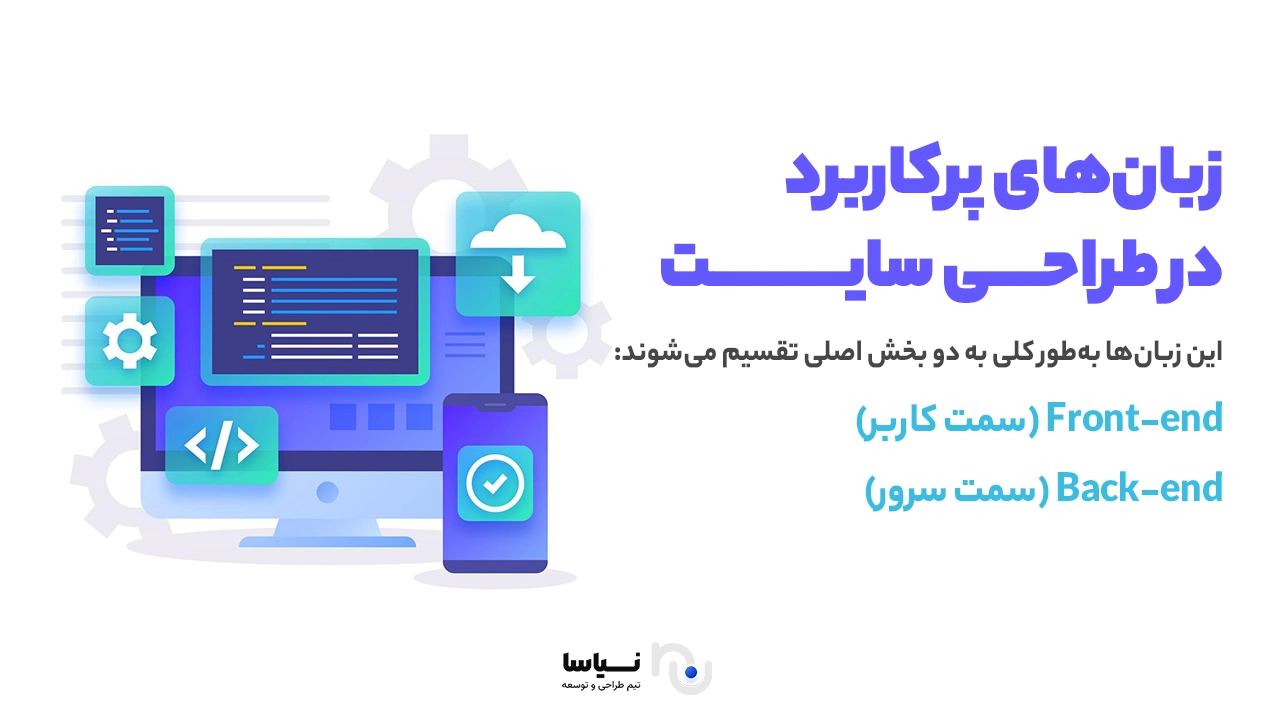
To design a website, you need to be familiar with various languages, each of which plays a particular part in creating and managing a site. Broadly, these languages fall into two main parts:
Front-end (the user's side)
Back-end (the server's side)
Familiarity with these languages and their uses helps you make the best choice for your own projects and gain a better understanding of the web design process.
Front-end (the user's side)
Front-end languages are used for designing and building a site's appearance and creating interactions with the user. They are responsible for creating an appealing, comfortable user experience for anyone arriving at a site. Some of the most important front-end languages are:
HTML (HyperText Markup Language): the main language for structuring web pages, which forms a site's skeleton.
CSS (Cascading Style Sheets): used for making web pages beautiful and setting their visual styles, such as colours, typefaces and the arrangement of elements.
JavaScript: a programming language for creating dynamic interactions in web pages — for displaying animation, for interaction with buttons and for loading data without having to reload a page.
back-end (the server's side)
Back-end languages are used for processing requests and communicating with databases. They are responsible for more complicated processing, such as storing information and managing data on the server. Some of the languages widely used in the back-end are:
PHP: one of the popular languages for developing content management systems (CMSs) such as WordPress, used for building dynamic sites and web applications.
Python: a powerful, simple language used in web development, particularly for working with popular frameworks such as Django and Flask.
Java: the language used in large, complicated projects that need great scalability and great security.
Ruby: this language is very popular for developing web applications and startups quickly.
C#: used in web development with ASP.NET frameworks for creating scalable, secure websites.
Databases
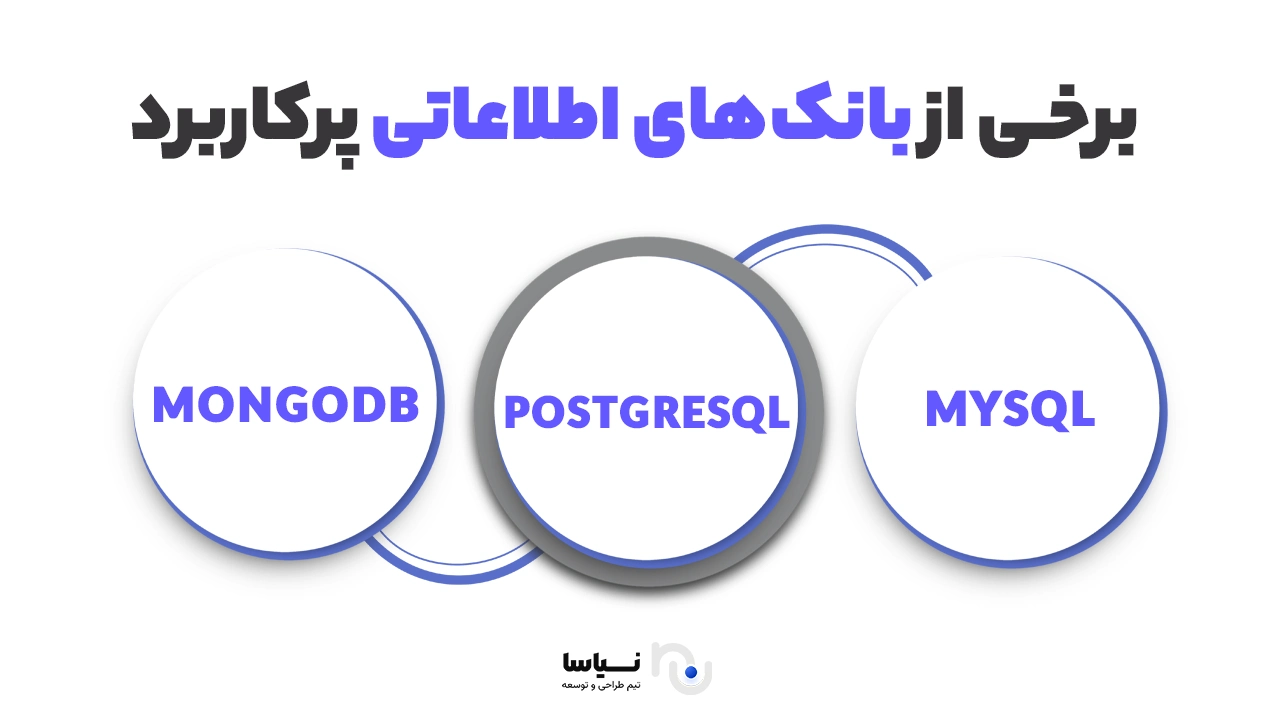
Alongside the programming languages, databases too play a vital part in storing a site's data. Choosing a suitable database can have a great effect on a site's performance and scalability. Some of the databases in wide use are:
MySQL
PostgreSQL
MongoDB
These databases are used for storing and managing data on the server's side and connect the data to the user interface.
A comparison of the programming languages
Comparing the programming languages is one of the most important steps in choosing a suitable language for web design. In this section we look at the various aspects of the front-end and back-end languages. The comparison takes in speed, ease of learning, security, flexibility and the job market, each of which we look at further below.
Speed and performance
Speed and performance are among the important factors in choosing a language for web design. Broadly, back-end languages such as Java and C# suit large, complicated projects because of their efficiency and greater scalability. Whereas PHP and Python may be slower, they perform well enough in most small and medium projects. In the front-end, JavaScript is widely used for improving a site's interactivity and dynamism, and its speed in the various browsers is generally high.
Ease of learning
Ease of learning matters a great deal to anyone new to the world of programming. Languages such as Python count among the ideal options for beginners, because of their simple syntax and easy coding. By contrast, languages such as Java and C# suit those looking for more complicated, more professional projects better. For the front-end, HTML and CSS are the most elementary languages and readily learnt, but JavaScript takes more effort for anyone who wants to create more advanced interactions.
Security
In sensitive, secure projects, choosing a suitable programming language matters a great deal. Java and C# are very powerful in this respect and offer good security tools for preventing various attacks. By contrast, PHP takes greater care in secure programming because of its older structure and its greater number of vulnerabilities. Python broadly has good security too, but in sensitive projects it may not be as suitable a choice as Java and C#.
Flexibility and scalability
The languages Java and C# are generally chosen for large, complicated projects because of their power and their great scalability. They can readily manage a great volume of data and users. Whereas PHP and Python have good flexibility too, they are not as scalable as Java and C# for very large projects. In the front-end, JavaScript can provide good scalability using frameworks such as React and Vue.js.
The job market and career opportunities
In the job market, the various languages vary according to the needs of the industry and of particular projects. Languages such as JavaScript, PHP and Python are very popular among web developers, and a great many small to medium projects use them. Java and C# are used in larger industries and larger companies and are used particularly in complicated, scalable systems. Ruby, though it has a certain popularity, is used mostly in startups and small projects.
The user community and learning resources
A large community and good learning resources can help you learn faster. Languages such as JavaScript, Python and PHP have a wide user community and a great many learning resources exist for them. Languages such as Ruby and Java have good communities too, but Ruby's learning resources may be more limited than other languages'.
If you are looking for web design that is distinctive and user-friendly, Niasa, with a team specialising in bespoke web design, is ready to meet your needs as well as possible. From e-commerce web design to bespoke applications, we can accompany you in reaching your aims.
What bears on choosing the best language
In choosing a suitable language for web design, there are factors you should bear in mind so as to choose the best option for your project. They take in the project's needs, time, cost, security, flexibility and access to resources, each of which relates directly to choosing between the various front-end and back-end languages. In this section we look at those factors.
The project's aim
A project's aim is one of the most important factors to consider. If your aim is to design a personal website or a simple shop, for instance, languages such as HTML and CSS for the front-end and PHP for the back-end can be suitable options. For more complicated projects such as large platforms and web applications, though, languages such as Java, C# and Python can be better choices.
The time and cost of development
Time and cost are two vital factors in choosing a language for web design. Simpler, more popular languages such as PHP and JavaScript can be a suitable choice for small and time-consuming projects, because a great many developers exist for them and varied learning resources are available. Whereas languages such as Java or C# may need more time and money to learn and to implement, they can be a better choice for large, complicated projects.
A project's security and stability
Security and stability matter a great deal, particularly in sensitive, large projects. Languages such as Java and C# suit projects needing great security, such as banks or government systems, better, because of their more advanced security structures. On the other hand, languages such as PHP and Python may need more attention paid to security matters, but implemented properly they can perform well in medium projects.
Flexibility and looking ahead
A language's flexibility in adapting to future needs, and its scalability, are among the most important factors in choosing it. For projects needing continuous development and expansion, languages such as Java and C# will be a suitable choice, because of their great power in scalability and in developing large systems. In the front-end, languages such as JavaScript have a great deal of flexibility because of their compatibility with a variety of frameworks and libraries.
Access to resources and to specialist people
The availability of learning resources, and the number of developers specialising in the various languages, matter a great deal. Widely used languages such as JavaScript, PHP and Python are easier to learn and to implement, because of their wide user community and numerous learning resources. Whereas languages such as Java and C# may need more specialist, more professional teams, they can perform as well as possible in larger projects with complicated needs.
Which is the best language for web design?
In this article we have looked at the various languages for web design and found that choosing a suitable language depends on a project's various circumstances and needs. To choose the best language, we should bear the following in mind:
Which language should we choose in which circumstances?
For small, quick projects such as personal sites or simple shops, languages such as HTML, CSS and JavaScript are good options. If a project needs greater complexity and scalability, the languages PHP, Python, Java and C# can be suitable choices.
Advice for beginners and for professional programmers
For beginners, the languages HTML, CSS and JavaScript for the front-end and PHP for the back-end are very suitable, because they are simple to learn and a great many learning resources are available. For professional programmers and large projects, languages such as Java, Python, and C# can offer greater power and flexibility.
The best option for quick development, for large projects, or for easy learning
If speed of development and ease of learning are your priority, languages such as JavaScript and PHP are excellent options for the front-end and the back-end. For large, complicated projects, Java and C# will be the best choice.
In summary
Choosing a suitable language for web design depends on a project's particular needs and aims. If you are looking for quick, simple design, HTML, CSS and JavaScript for the front-end and PHP for the back-end are good choices. For larger, more complicated projects, though, the languages Java, Python and C# can be the best option. For more professional learning and development, online resources and specialist advice can also help you choose the language suited to your project and plan your development path properly. All in all, having a professional, well-optimised website matters a great deal. Niasa, offering web design services, helps you improve your online presence and create a remarkable user experience for your site's visitors. For further information and advice on web design with WordPress, visit the link.
Frequently asked
- Which programming languages should be used for designing a website?
- Designing a website takes in two parts: front-end design and back-end design. The front-end is designed in CSS, HTML and JavaScript, while the back-end of a website is designed and developed in PHP, Python, Ruby, Java or C#.
- What is the best language for designing a website?
- Any of PHP, Python, Ruby, Java or C# can be used for designing a website. None of them can be named the best language for designing a website, because each has its own advantages and drawbacks, and everyone should choose one of them for the back-end of a website according to their own circumstances.
- What bears on choosing the best programming language for web design?
- The best language for web design should be chosen according to the platform you intend to use. Before choosing a programming language, you should establish what kind of server you intend to run your website on; you can then choose the programming language that suits that server and design your site in it.