What a ready-made website template is and why it matters
The kinds of ready-made website template and what each is for
Why choose a ready-made template over a bespoke design
The important factors in choosing the right ready-made template for a website
The advantages and limits of using ready-made website templates
A step-by-step guide to using ready-made WordPress themes
Choosing and buying a WordPress theme
In today's digital world, a professional website is essential for businesses and for individuals. Ready-made website templates are an economical, efficient way of designing a website quickly and professionally. They let designers and business owners create beautiful, practical websites without deep programming knowledge. In this article we look thoroughly at what ready-made website templates are, at their kinds, at the criteria for choosing the right one and at how to use them.
What a ready-made website template is and why it matters
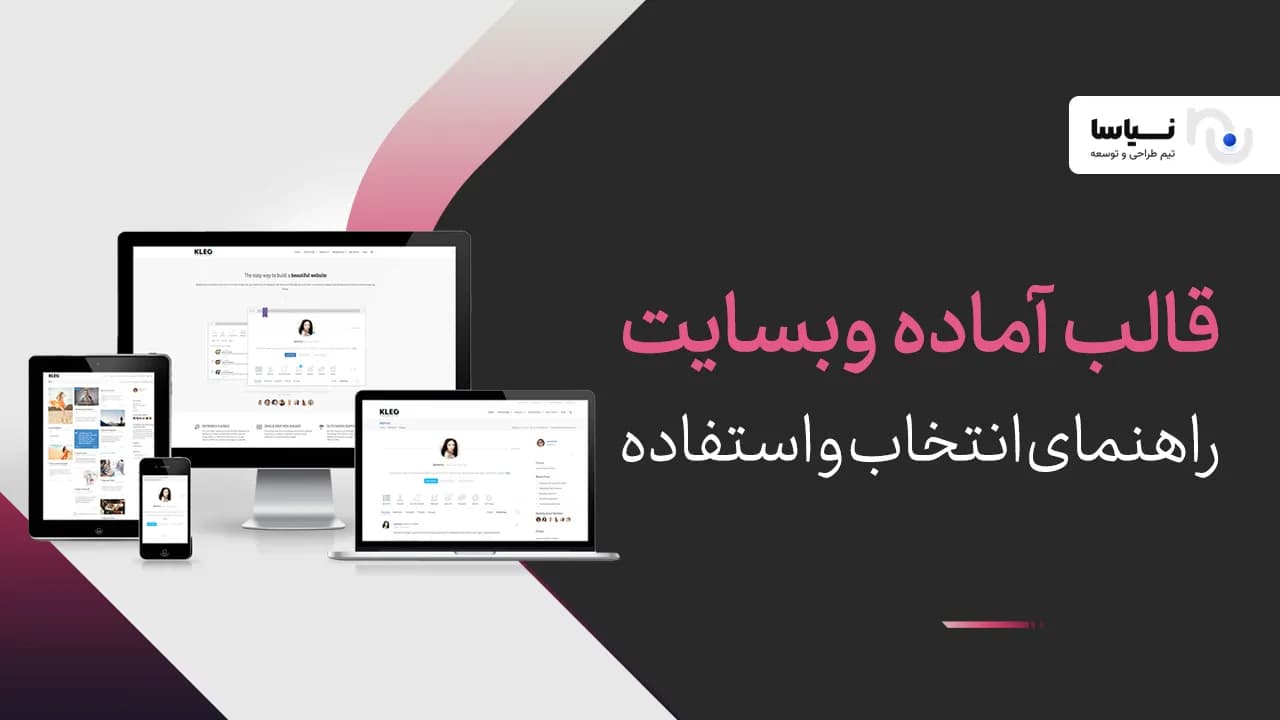
A ready-made website template is a pre-designed layout containing the structure, the graphical elements and the practical features a website needs. These templates are created by professional designers who have taken the principles of web design and user experience into account, and they are ready to use. Having bought or downloaded one, a user can install it and put their own content into it.
Ready-made templates matter a great deal in the world of web design. They let you carry out a professional, attractive design quickly and easily. One of the most important advantages is the saving in time and money. Designing a website from scratch can take weeks or even months and cost a great deal, but with a ready-made template that process comes down to a few hours or a few days.
Ready-made templates are also usually built by professional designers who have observed the principles of web design. That means your website has a professional, user-friendly appearance from the start. Ready-made templates have also usually been tested and are compatible with most browsers, so the chance of technical problems is smaller.
The kinds of ready-made website template and what each is for
Ready-made website templates fall into different kinds according to their use and purpose. Each has its own characteristics and capabilities, designed to suit particular needs. Which kind suits you depends on why you are building a website and on the kind of content you intend to present. Below we introduce the three main kinds:
Commercial templates
Commercial templates are designed for businesses intending to sell their products or services online. They usually include product pages, a basket, a payment gateway and the other features an online shop needs. Commercial templates are available on a range of platforms, WordPress (with the WooCommerce plugin), PrestaShop, Magento and Shopify among them.
Among the important features of commercial templates are a product management system, filtering and search, related products, a review and rating system, and online payment. These templates are usually designed to give users an easy and enjoyable buying experience.
News templates
News templates are designed for news websites, online magazines, blogs and content sites. They are built so as to present a large volume of content in an organised, engaging way. Among the important features of news templates are content categories, showing trending or most-read material, a search system, space for advertising and content sharing.
News templates usually have a lively, varied home page able to present different kinds of content: news, articles, videos and images. They also usually load quickly, so that users can reach the content they want without delay.
Corporate and institutional templates
Corporate and institutional templates are designed to present companies, organisations and institutions. They usually include pages introducing the company, its services, its team, contact details, its portfolio and a blog. Their main purpose is to create a professional, trustworthy picture of the company or organisation.
Among the important features of corporate templates are a professional, modern design, the ability to present services and products, a portfolio, an introduction to the team, and contact forms. These templates are usually designed to give visitors a professional and trustworthy picture of a company.
Why choose a ready-made template over a bespoke design
Choosing between a ready-made template and a bespoke website design is one of the important decisions in building a website. Each has its own advantages and drawbacks, and choosing between them depends on your needs, your budget and the time available. Below we set out the most important reasons that may lead you towards a ready-made template:
The first and most important advantage of ready-made templates is their low cost compared with a bespoke design. Designing a website bespoke can cost anything from a few million toman to tens of millions, whereas ready-made templates are available at far lower prices and sometimes free.
Launch time is another important reason many people and businesses turn to ready-made templates. Designing a website bespoke is usually a long process that may take weeks or even months, whereas with a ready-made template you can have your website up within a few days or even a few hours.
Another advantage of ready-made templates is their quality and efficiency. They are usually designed and tested by professional teams and follow the standard principles of web design. That means they are generally of high quality and perform well.
In some cases, of course, a bespoke design may be the better option. If you have particular, complicated needs that no ready-made template meets, for instance, or if you want a website that is entirely distinctive, a bespoke design may be better.
The important factors in choosing the right ready-made template for a website
Choosing the right ready-made template is one of the most important stages in building a website. The template you choose will have a considerable effect on your website's appearance, its performance and its success. It is therefore important to choose carefully and on the right criteria. Below we look at some of the most important factors to weigh.
Compatibility with phones and tablets
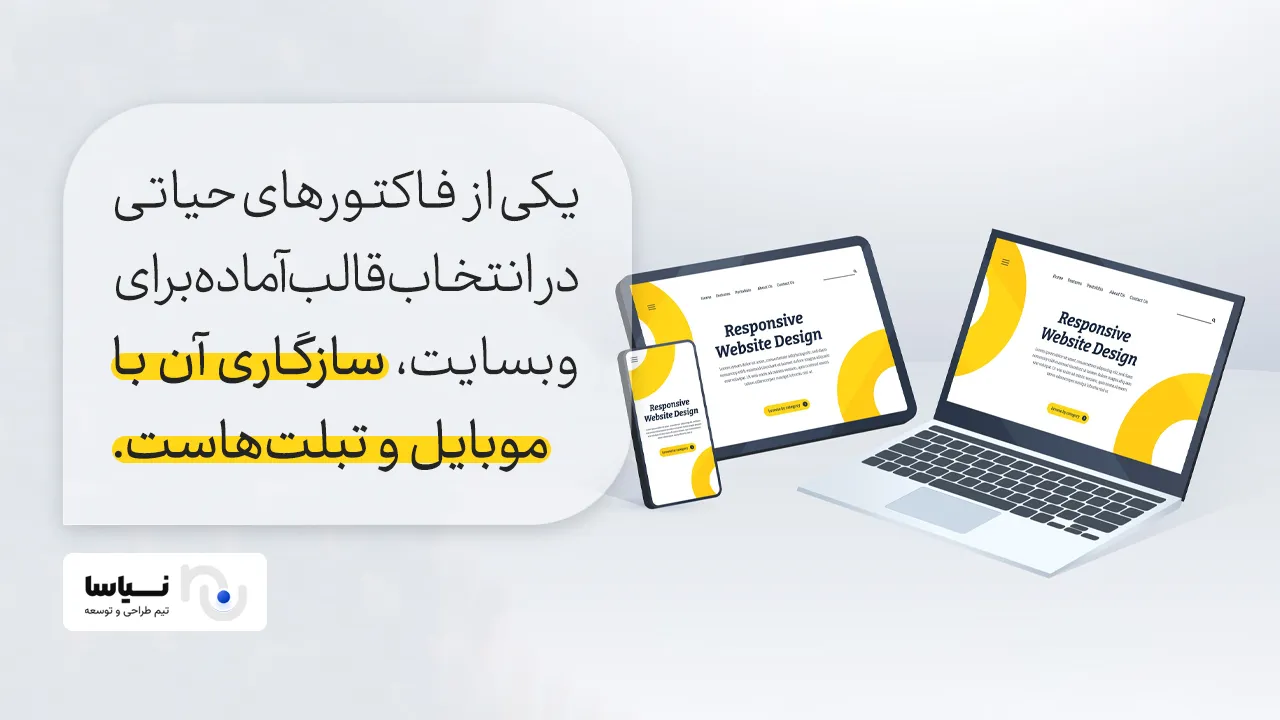
More than half of website traffic today comes through mobile devices and tablets. A template's compatibility with mobile devices therefore matters a great deal. The template you choose has to be responsive — that is, able to adapt itself to the screen size of different devices.
To establish whether a template is mobile-friendly, you can use tools such as Google's Mobile-Friendly Test, or test it on a range of devices. Templates' descriptions also usually state whether they are responsive.
As well as improving the user experience, mobile compatibility has a positive effect on your website's SEO. Google and other search engines give mobile-friendly websites a higher score and show them higher in search results.
Load speed and optimisation
A website's load speed is one of the most important factors in the user experience and in SEO. Heavy, unoptimised templates can make a website slow to load and spoil the user's experience. It is therefore important to choose a template that is well optimised for speed.
To gauge a template's load speed you can use tools such as Google PageSpeed Insights or GTmetrix. They analyse a website's load speed and suggest ways of improving it.
A number of things affect a template's load speed, among them the size of the CSS and JavaScript files, the use of heavy images and the number of HTTP requests. Well-optimised templates usually use techniques such as reducing file sizes, lazy loading images, and using a CDN to increase load speed.
The advantages and limits of using ready-made website templates
Using ready-made templates has advantages and limits, and knowing them can help you decide better. Below we look at some of the most important of each.
The advantages of using ready-made templates include:
Saving time and money: designing a website from scratch takes a great deal of time and money, whereas with a ready-made template you can have your website up in the least possible time and at far lower cost.
Professional design: ready-made templates are usually built by professional designers observing the principles of web design, so they have a professional and appealing appearance.
Support and updates: most ready-made templates come with technical support and regular updates that help you resolve any problems.
A great variety: there is an enormous variety of ready-made templates, and you can choose from among thousands the one that best matches your needs.
On the other hand, using ready-made templates has its limits too:
They are not exclusive: ready-made templates are not exclusive, and other websites may be using the same one.
Limits on customisation: you may not be able to change a template to match your needs and taste exactly.
Security problems: some ready-made templates may carry security vulnerabilities.
Greater weight and lower speed: some ready-made templates, having a great many features, may be heavy and slow a website's loading down.
A step-by-step guide to using ready-made WordPress themes
As one of the most popular content management systems, WordPress is the choice of many people and businesses for building a website. With thousands of ready-made themes and plugins, the platform offers a great deal for building websites of every kind. Below we set out a step-by-step guide to using ready-made WordPress themes.
The steps for installing and setting up a WordPress theme:
First install WordPress on your host.
Then sign in to the WordPress dashboard and go to "Appearance > Themes".
To install a theme, you can use the WordPress repository, upload the theme's zip file, or use FTP.
Once installed, activate the theme.
Depending on the theme, you may need further configuration, available under "Appearance > Customize" or in the theme's own menu.
Choosing and buying a WordPress theme
Choosing the right WordPress theme takes attention to several criteria. Alongside the general factors set out above, with WordPress themes you should also consider the following:
Compatibility with your WordPress version: make sure the theme is compatible with the version of WordPress you are using.
Scope for customisation: choose a theme that gives you enough scope to customise it.
Support and updates: choose a theme with active support and regular updates.
Compatibility with important plugins: make sure the theme is compatible with important WordPress plugins such as WooCommerce, Yoast SEO and so on.
There are various places to buy a WordPress theme. The official WordPress repository (WordPress.org) offers a great many free themes. For premium themes you can use reputable marketplaces such as ThemeForest, Elegant Themes, StudioPress and others. Many Iranian designers also offer Persian WordPress themes at reasonable prices.
Before buying a theme, always look at its demo, read users' reviews and make sure it has the capabilities you need. Pay attention as well to the length of support and to the number of downloads and installations allowed. To order a WordPress website design, visit the link.
In summary
Using ready-made website templates is an effective, economical way of building a professional website. They can reduce the time and cost of design sharply and let you focus more on your content and your marketing strategy. Choosing the right template, though, takes attention to a range of factors: the kind of use, mobile compatibility, load speed and so on.
In this article we have tried to offer a thorough guide to choosing and using ready-made website templates. We hope it helps you choose and use the right template for your own website. Remember that the ultimate aim is to build a website that best answers your needs and those of your audience.